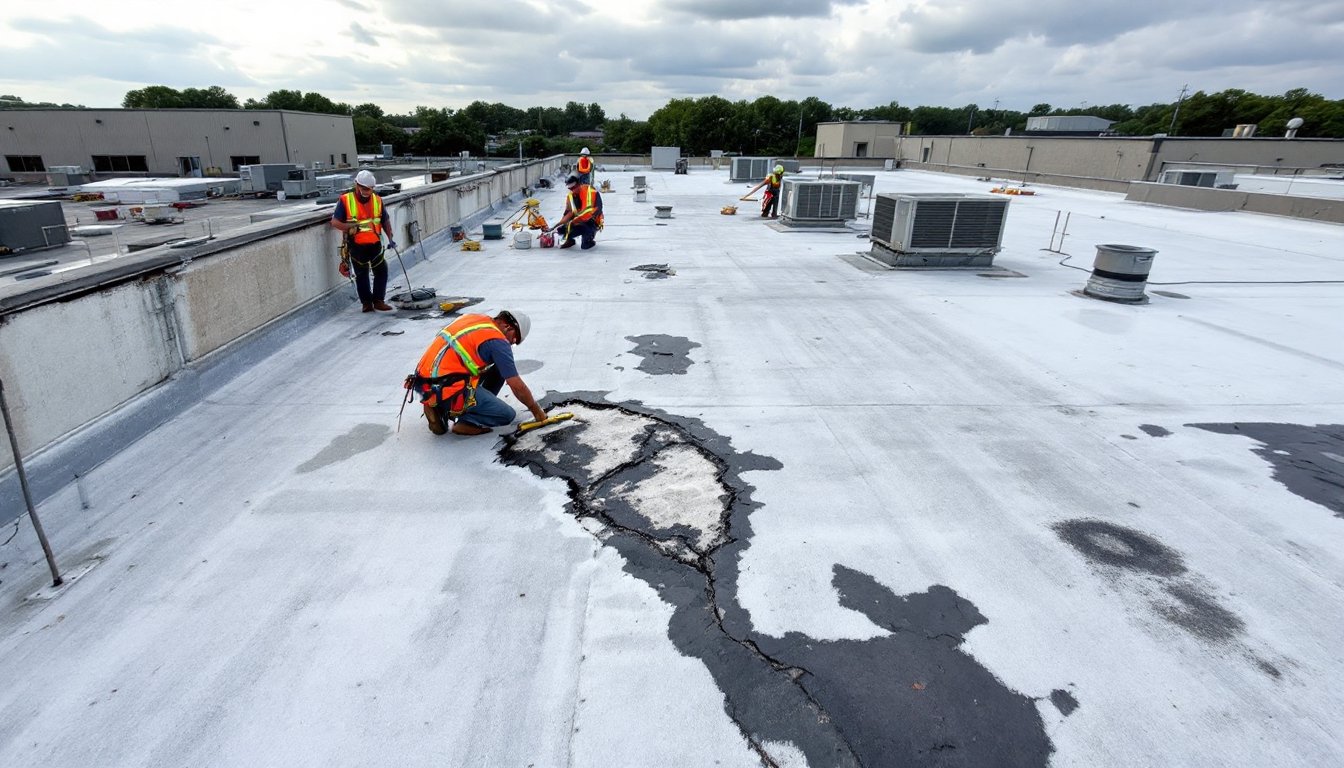
Whether you’re managing a warehouse, industrial facility, or mid-sized office building, roof problems don’t announce themselves politely. A small leak becomes a costly water intrusion: a missing flashing turns into structural damage. Commercial roof repair services aren’t just about fixing emergencies, they’re about protecting your asset and avoiding downtime. Unlike residential roofs, commercial roofing systems are more complex, span larger areas, and often require specialized expertise. Understanding when to call in professionals and what to expect from regular maintenance can save you tens of thousands in unexpected repairs down the line.
Table of Contents
ToggleKey Takeaways
- Commercial roof repair services protect your asset and prevent costly downtime by addressing leaks, flashing failures, and ponding water before they become structural damage.
- Common issues like membrane punctures, flashing failures, and standing water require professional intervention, especially for repairs mandated by building codes or affecting climate-controlled spaces.
- Schedule inspections twice yearly and maintain detailed records of repairs and maintenance to catch problems early and streamline insurance claims.
- Different roof systems (TPO, EPDM, metal, BUR) require specific repair approaches—knowing your roof type helps you communicate effectively with contractors.
- Choose licensed, insured, and bonded contractors with specialization in your roof type and similar projects; compare multiple bids and verify alignment with manufacturer warranties.
- Establish a roof reserve fund budgeting 1–2% of property value annually to avoid emergency repairs and enable strategic scheduling during favorable seasons.
Understanding Commercial Roof Repair Needs
Common Roof Problems in Commercial Buildings
Commercial roofs face wear patterns that residential roofs don’t. Foot traffic from HVAC technicians, weather exposure over large uninterrupted surfaces, and the weight of equipment all take their toll. Membrane punctures, small tears or holes in the roof membrane, are among the most common issues. Flashing failures (where the roof meets walls, vents, or skylights) allow water to seep behind the membrane, causing hidden rot. Ponding water, where flat or low-slope roofs collect standing water, accelerates deterioration and invites leaks.
Industrial roof maintenance often involves additional challenges: corrosive environments that eat away metal components, vibration from machinery that loosens fasteners, and the need for specialized coatings. Warehouse roof repair frequently addresses weather damage, hail, wind, and UV degradation, which commercial insurance policies may partially cover if documented properly.
When to Call Professional Repair Services
Not every leak is a DIY problem. If your building relies on consistent climate control, lost production due to downtime often costs more than professional repairs. Structural concerns, sagging, visible rot, or significant membrane deterioration, require licensed contractors who understand load calculations and local building codes. Most jurisdictions mandate that commercial roof work above a certain height or complexity area be performed by licensed professionals and inspected by a qualified third party.
Call in professionals immediately if you spot pooling water that hasn’t drained in 48 hours, membrane tears larger than 3 inches, interior staining suggesting active leaks, or if your roof is nearing the end of its expected lifespan. Professional diagnosis beats guessing: a contractor can identify whether you need a patch, section replacement, or a full system upgrade.
Types of Commercial Roof Systems
Commercial roofing falls into several categories, each with different repair requirements. Flat or low-slope roofing, typically TPO (thermoplastic polyolefin), EPDM (ethylene propylene diene monomer rubber), or modified bitumen, covers the majority of commercial buildings. These membranes are durable and relatively cost-effective, but they require regular maintenance to prevent ponding and seam failures.
Metal roofing systems (standing seam or corrugated metal) are common on industrial and warehouse buildings. They’re lightweight, durable, and excellent for weathering heavy rain, but they can develop fastener issues and rust at seams if not properly maintained. Industrial roof maintenance on metal systems focuses on coating integrity and fastener replacement.
Built-up roofs (BUR), older tar-and-gravel systems, are still found on legacy buildings. While they’re tried-and-true, they’re heavier, require more frequent inspection, and have largely been replaced by membrane systems in new construction.
Each system requires different repair approaches. Commercial building roof repair for a TPO system might involve seam welding or membrane patching, while a standing seam metal roof might need fastener replacement or panel patching. Knowing your roof type helps you discuss repairs intelligently with contractors.
Preventative Maintenance for Roof Longevity
The best commercial roof maintenance strategy is proactive. Scheduled inspections, typically twice yearly, in spring and fall, catch problems before they become expensive. Clear debris from gutters, downspouts, and low spots. Leaves, dirt, and gravel retain moisture and accelerate degradation.
Address ponding water immediately. If water sits on your roof for more than 48 hours after rain, you’ve got a drainage issue. This isn’t cosmetic: it dramatically shortens membrane life. Minor debris removal and gutter cleaning are tasks building maintenance staff can handle, but larger drainage problems demand contractor involvement.
Document everything. Photograph roof condition during inspections, keep records of repairs, and maintain a maintenance log. This documentation is gold when filing insurance claims or discussing replacement timelines with contractors. Many commercial property managers find that professional repair and maintenance services help establish consistent inspection schedules and historical records.
Establish a roof reserve fund, many property managers budget 1-2% of property value annually for roofing maintenance. This prevents the panic of unplanned emergency repairs and allows you to schedule work during favorable seasons rather than scrambling during storm season.
What to Expect from Professional Roof Inspections
A thorough commercial roof inspection takes 2-4 hours for most buildings. The contractor walks the entire surface, checking membrane integrity, examining all penetrations (vents, skylights, flashing), measuring ponding areas, and photographing potential problem zones. They’ll look for blistering (air pockets under the membrane), splits, and seam degradation.
Reputable contractors use thermal imaging to spot moisture trapped in the roof system, you can’t see wet insulation, but thermal cameras detect temperature differences that reveal saturation. This technology costs more upfront but saves money by identifying hidden problems before they become structural issues.
The inspection report should detail conditions, photograph problem areas with timestamps, and recommend prioritized repairs or replacement timelines. It should specify whether issues are cosmetic, functional, or structural. A contractor might say, “The southeast corner has surface cracking that doesn’t affect waterproofing yet, but the north parapet flashing is failing and needs replacement within 30 days.”
Get multiple inspections if you’re considering a roof replacement. Different contractors may recommend different timelines, and a second opinion, especially if it affects a major capital decision, is money well spent. When comparing contractors, those offering services similar to what you’d find on HomeAdvisor’s platform often provide transparent pricing and verifiable reviews.
Choosing the Right Roof Repair Contractor
Credentials matter. Look for contractors licensed in your state, insured (general liability and workers’ comp), and bonded. Commercial roof work isn’t regulated as strictly as electrical or plumbing in many areas, but that means vetting is your responsibility.
Specialization counts. A contractor experienced with warehouse roof repair may excel at metal systems but lack depth with TPO membranes. Ask for references from similar projects, ideally, properties of similar size and roof type. Call those references and ask specific questions: Did the work come in on budget? How quickly did they respond to callbacks?
Price isn’t everything. The lowest bid often reflects corners cut or inexperience. Mid-range bids with strong references and clear scope of work typically deliver better value. Get detailed proposals that break down materials, labor, timeline, and warranty terms. If a contractor can’t explain what they’re fixing and why, that’s a red flag.
For finding local options, platforms like commercial roof repair services near you aggregate contractor reviews and allow you to compare multiple quotes quickly. Verify that proposed repairs align with your roof’s manufacturer recommendations, some repairs done incorrectly can void remaining warranty coverage.
Warranty and follow-up matter. Reputable contractors offer workmanship warranties (typically 5-10 years) and ensure you understand material warranties. Schedule a post-repair inspection 6-12 months later to confirm the fix held and catch any secondary issues.