Indoor fern plants are an excellent choice for homeowners and DIY enthusiasts looking to add vibrant greenery without the fuss of finicky tropical specimens. These ancient plants thrive in moderate light and consistent moisture, making them ideal for living rooms, bathrooms, and shaded corners where other houseplants struggle. Unlike succulents that demand bright light and infrequent watering, ferns reward steady care with cascading fronds that soften a room’s angles and improve air quality. Whether you’re a seasoned gardener or picking up your first potted plant, indoor ferns offer reliable, lush results that transform your home into a more inviting space.
Table of Contents
ToggleKey Takeaways
- Indoor fern plants thrive in moderate, indirect light and consistently moist soil, making them ideal for living rooms, bathrooms, and shaded corners where other houseplants struggle.
- Boston ferns and maidenhair ferns are the best beginner varieties, with Boston ferns offering vigorous growth up to 3 feet and maidenhair ferns providing delicate, architectural appeal in smaller spaces.
- Moisture, humidity, and light are the three non-negotiable elements for healthy indoor ferns—aim for 50% relative humidity or higher, soil that feels like a wrung-out sponge, and 12-14 hours of indirect light daily.
- Ferns actively remove indoor toxins like formaldehyde and improve air quality year-round, offering both aesthetic and health benefits that exceed many conventional houseplants.
- Brown frond tips, drooping leaves, and pest infestations are common issues easily fixed by adjusting humidity levels, improving drainage, and using distilled water instead of chlorinated tap water.
Why Indoor Ferns Are Perfect For Your Home
Indoor fern plants are fundamentally different from the high-maintenance houseplants many beginners struggle with. They don’t demand a sunny windowsill or weeks of neglect: instead, they thrive in moderate, indirect light and prefer consistently moist soil, conditions that most home interiors naturally provide.
Ferns excel in humid environments, which makes them perfect companions for kitchens and bathrooms where steam from cooking or showering creates ideal growing conditions. Their feathery fronds soften hard architectural lines and add texture that smooth-leaved plants can’t match. Unlike many flowering houseplants that bloom seasonally and then look sparse, ferns deliver year-round visual interest.
From an air quality perspective, ferns actively remove toxins like formaldehyde from indoor air. This isn’t marketing hype, the NASA Clean Air Study documented it decades ago, and it holds up in modern research. If you want large indoor house plants that improve your space, ferns belong on the list. They’re also incredibly forgiving: they’ll tell you clearly when they need water (droopy fronds) or when conditions are off (brown tips), making them excellent teaching plants for anyone learning houseplant care.
Best Indoor Fern Varieties For Beginners
Boston Ferns
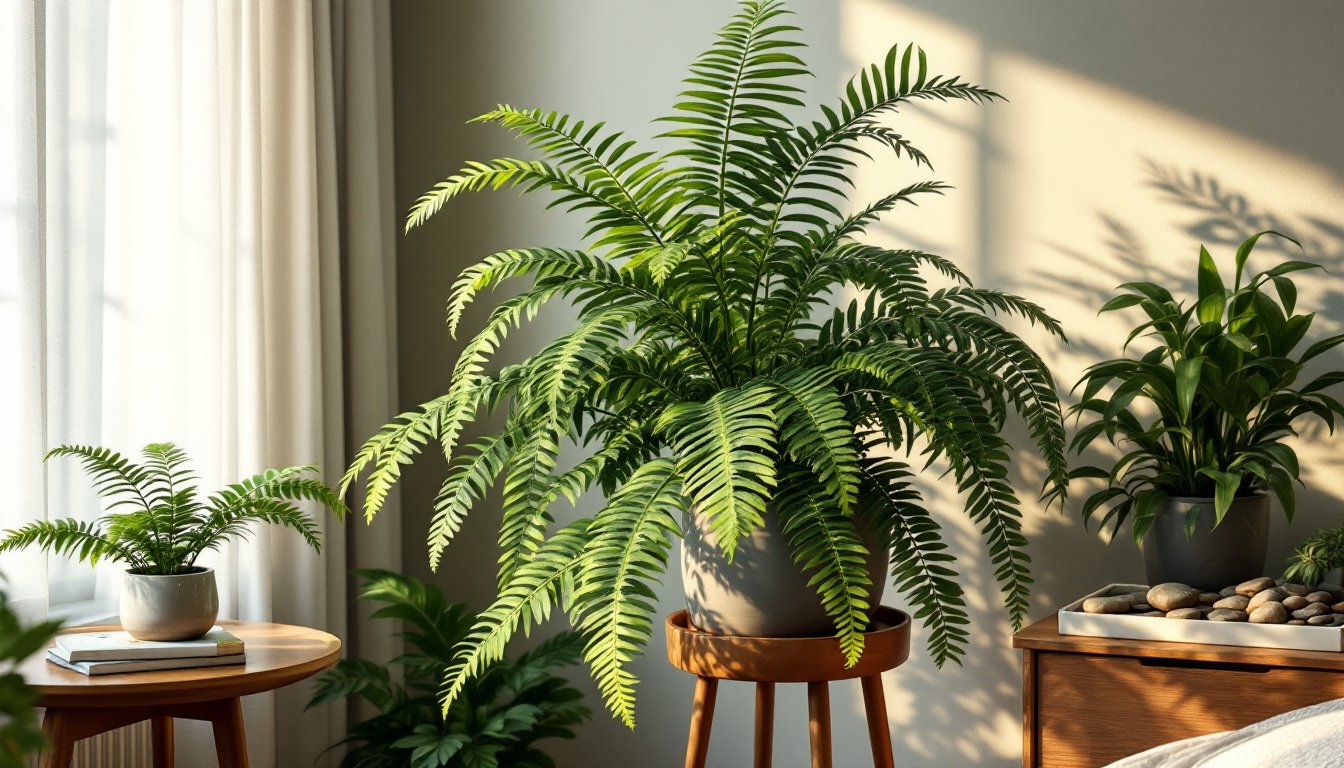
The Boston fern (Nephrolepis exaltata) is the workhorse of indoor fern growing. It produces long, gracefully arching fronds that can reach 2 to 3 feet in length, making it an excellent choice for high shelves or plant stands where cascading growth becomes a design feature. Boston ferns tolerate a wider range of light and temperature conditions than many other ferns, though they still prefer bright, indirect light and consistent moisture.
These ferns are vigorous growers that appreciate humidity: misting fronds 2-3 times weekly or placing the pot on a pebble tray with standing water underneath keeps humidity levels stable. Their main weakness is spider mites, which thrive in hot, dry air. If you spot tiny yellow stippling on fronds or fine webbing, increase humidity and spray the foliage with water, spider mites hate moisture. Boston ferns can also shed fronds under stress from cold drafts or sudden temperature swings, so keep them away from heating vents and exterior doors during winter.
Maidenhair Ferns
Maidenhair ferns (Adiantum species) are the delicate performers of the fern world. Their thin, wiry black stems carry dainty, fan-shaped leaflets that look almost architectural in their precision. Maidenhair ferns are smaller than Boston varieties, typically 12 to 18 inches tall, making them perfect for desks, shelves, or as table centerpieces in rooms with consistent conditions.
These ferns are humidity enthusiasts: they struggle in dry air and drop fronds quickly if conditions aren’t right. This doesn’t mean they’re impossible, just that they perform best in bathrooms or kitchens where ambient humidity naturally runs higher. Keep soil evenly moist (not soggy) and provide bright, filtered light away from direct sun. If brown fronds develop even though proper care, try grouping several potted maidenhair ferns together, their combined transpiration raises local humidity, and they’ll reward you with full, vibrant growth.
Essential Care Requirements For Healthy Ferns
Successful fern growing revolves around three non-negotiable elements: moisture, humidity, and light. Get these right, and your ferns will thrive: neglect them, and even tough varieties like Boston ferns deteriorate quickly.
Watering is the foundation. Ferns prefer soil that’s consistently moist but not waterlogged, think of a wrung-out sponge, not a swamp. Check soil moisture with your finger 1 inch down: water when it feels dry at that depth. Most indoor ferns need watering 2-3 times weekly, depending on pot size, soil composition, and season. In winter, reduce frequency slightly as growth slows. If your tap water is heavily chlorinated, let it sit overnight before using it on ferns: some species are sensitive to chlorine buildup.
Light requirements vary slightly by species, but most indoor ferns tolerate moderate, indirect light exceptionally well. Bright, filtered light (like sun through a sheer curtain) is ideal: direct afternoon sun bleaches fronds and stresses plants. North or east-facing windows work beautifully. If your space is dim, consider a small grow light positioned 6-12 inches above the plant: most ferns appreciate 12-14 hours of light daily. When comparing setup options, IKEA house plants and affordable alternatives often come with simple grow light solutions that complement low-light spaces.
Humidity is the differentiator that separates fern success from fern failure. Aim for 50% relative humidity or higher. Misting works, but it’s temporary: instead, group ferns together, use pebble trays, or run a small humidifier in the room. Bathroom windowsills are fern paradise because they naturally stay humid. During winter when indoor heating dries the air, humidity management becomes critical, it’s when most fern problems appear.
Creating The Right Environment
Beyond watering and humidity, your home’s overall setup determines whether ferns flourish or decline. Soil composition matters more than many gardeners realize. Standard potting soil often compacts and retains too much water, suffocating roots. Instead, use a lightweight fern-specific potting mix (available at garden centers) or amend regular potting soil with equal parts perlite and peat moss or coconut coir. This creates the airy, moist-but-draining texture ferns demand.
Container selection directly impacts watering success. Plastic pots retain moisture longer than clay, which dries quickly: for beginners, plastic is often more forgiving. Ensure pots have drainage holes, no exceptions. A pot 1-2 inches larger in diameter than the root ball gives room for growth without excess moisture-holding capacity.
Temperature stability keeps ferns calm. Most indoor varieties perform best at 60-75°F during the day and slightly cooler at night. Cold drafts from windows or heating vents cause leaf drop and stress. If your home runs warmer, increase misting frequency and humidity to compensate. Similarly, when transitioning ferns between seasons or rooms, do it gradually over a week or two rather than moving them to dramatically different conditions overnight.
Fern placement in your home matters tactically. Bathrooms, with their natural moisture and moderate light, are fern headquarters. Kitchens work well too. Living rooms require more deliberate setup, either a humidifier, grouped planters, or proximity to windows with indirect light. If you’re exploring unusual house plants that pair well with ferns, look for species that also appreciate humidity: they’ll grow together in a microclimate that’s easier to maintain than isolated specimens scattered throughout the house.
Troubleshooting Common Fern Problems
Even experienced growers encounter fern issues, but most are fixable once you identify the cause. Brown frond tips usually signal humidity that’s too low or tap water minerals accumulating in soil. Mist more frequently, use distilled water if possible, and flush the pot with distilled water periodically to leach out salts. Yellow or pale fronds point to inadequate light: move the plant closer to a window or introduce a grow light. Fronds drooping even though moist soil suggest root rot from waterlogging. Let the soil dry out slightly more between waterings, repot into fresh, airy soil if the problem persists, and ensure drainage holes are clear.
Pest infestations, while less common on ferns than on succulents, do occur. Mealybugs and spider mites are the main culprits. Early detection is critical: examine the undersides of fronds weekly. If you spot tiny cotton-like clusters or fine webbing, treat immediately with neem oil or insecticidal soap (follow package directions exactly). Increase humidity to discourage mites, and isolate the affected plant to prevent spread to others.
Slow growth or no new fronds usually reflects insufficient light or depleted nutrients. Ferns don’t demand heavy feeding, but monthly diluted liquid fertilizer (half-strength) during the growing season (spring and summer) helps. In fall and winter, stop fertilizing as growth naturally slows. If a fern has occupied the same pot for 2+ years without new growth, repotting into fresh soil and a slightly larger container rejuvenates it. Finally, if your plant experiences a sudden environmental shock (cold, drafts, or relocation), be patient: new growth often takes 4-6 weeks to resume. Gardening resources like Sunset and Country Living offer regional guidance on seasonal care adjustments that apply to your climate zone.