Plants do more than just sit in a corner and look green, they transform living rooms into spaces that feel alive, calm, and genuinely inviting. Whether you’re working with a small apartment or a sprawling living area, indoor plants offer flexible, affordable decoration solutions that also purify air and boost mood. The trick isn’t filling every surface with greenery: it’s placing plants strategically so they anchor your room’s design and draw the eye exactly where you want it to go. This guide covers seven proven decoration ideas for 2026 that even beginners can pull off with confidence.
Table of Contents
ToggleKey Takeaways
- Indoor plants decoration ideas transform living rooms into calm, inviting spaces while purifying air and boosting mood through strategic placement rather than random greenery.
- Vertical garden walls maximize impact without consuming floor space by using floating shelves, wall-mounted planters, or living wall systems positioned near bright windows with proper drainage.
- Corner plant clusters create focal points by grouping 3-5 plants of varying heights using odd numbers and mixed pot materials to add dimension and visual texture.
- Trailing plants like pothos and String of Pearls soften hard lines when mounted high on shelves or walls, creating graceful movement and breaking up rigid furniture geometry.
- Mixing plant heights and contrasting leaf textures—pairing bold large-leaved plants with fine-textured foliage—creates visual rhythm and prevents monotonous room design.
- Statement plants that are 3-5+ feet tall serve as room anchors when positioned where the eye naturally lands, requiring bright indirect light, consistent watering, and regular leaf dusting for optimal health.
Create a Vertical Garden Wall for Maximum Impact
A vertical garden wall makes a bold statement without hogging floor space. Pick a wall that gets decent light, ideally near a window, but not in direct afternoon sun that’ll bake tender foliage. You’ve got three main approaches: floating shelves, wall-mounted planters, or a living wall system.
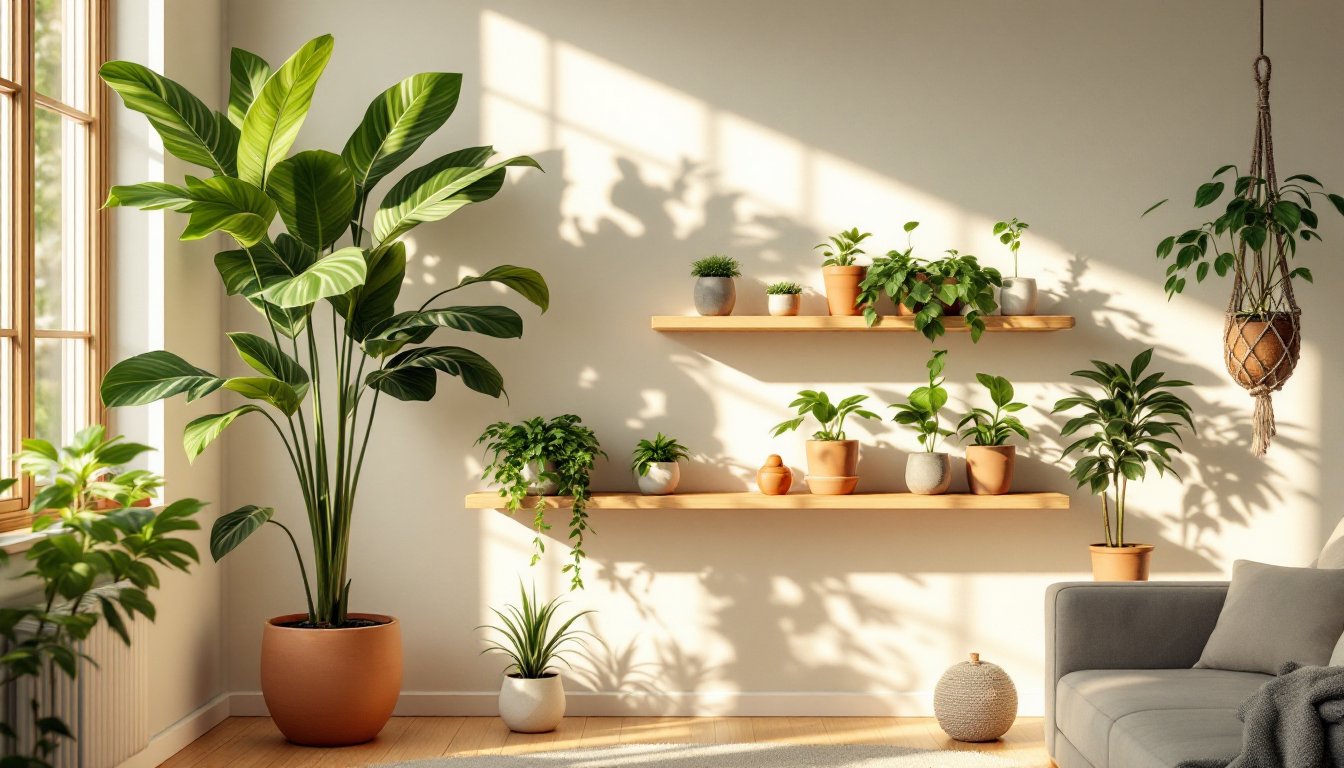
Floating shelves are the easiest and most flexible. Mount 3-5 shelves at staggered heights using proper wall anchors (studs if possible for weight capacity). Arrange plants from smallest to largest as you go down, or mix sizes unpredictably for visual rhythm. Each shelf can hold 2-3 small to medium pots.
Wall-mounted planters work better on drywall if you use heavy-duty anchors rated for your total load. A 22-24 inch pocket organizer (the fabric kind used for shoes) actually makes a surprisingly effective vertical garden when filled with small potted plants or directly with soil. Ensure water drains properly, place a waterproof mat or plastic sheet behind it to protect your wall.
Living wall systems (like modular panels) cost more upfront but create a lush, jungle-like effect fast. They typically require a drip irrigation setup, which isn’t complicated but does demand initial investment and maintenance.
Water is the tricky part with any vertical setup. Gravity pulls water down, so plants at the top dry out faster than those below. Water from the top and let excess drip down, or install drip lines if you’re going full vertical farm mode. Check soil moisture daily, vertical gardens dry quickly, especially in warm months.
Use Corner Plant Clusters to Add Dimension
Empty corners are dead space until you fill them with a plant cluster. This approach is simple: group 3-5 plants of varying heights in one corner, and suddenly that neglected spot becomes a focal point.
Start with one tall statement plant (4-6 feet) at the back, a rubber plant, dracaena, or bird of paradise works well. In front, add 2-3 medium plants (18-36 inches), then fill the foreground with low growers or trailing types. Stagger pots at different distances from the corner rather than lining them up in a row: this creates depth and feels intentional.
Use odd numbers (3, 5, 7) when grouping, it’s a design principle that just feels right to the eye. Vary pot materials too: a mix of ceramic, terra cotta, and concrete creates visual texture without clashing.
Corner clusters work in any room lighting situation. If your corner is dim, stick with shade-tolerant plants like pothos, ZZ plant, or philodendron. Bright corners can handle sun-loving ferns or succulents. The beauty of clustering is that if one plant gets leggy or struggles, you can swap it out without dismantling the whole arrangement.
Group plants with similar water needs together so you’re not babysitting different schedules. A fern won’t appreciate sitting next to a drought-tolerant snake plant, one’ll stay dry, the other’ll rot.
Incorporate Trailing Plants for Softness and Flow
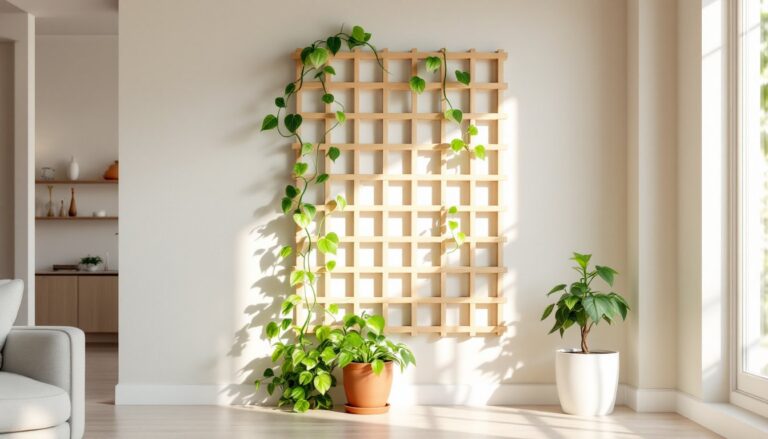
Trailing plants create movement and break up hard lines in a room. Pothos, String of Pearls, Philodendron Brasil, and creeping fig are classics for good reason, they grow fast, tolerate neglect, and look graceful as they cascade down shelves or walls.
Mounting a trailing plant high on a bookshelf or floating shelf lets it spill over the edge naturally. As it grows, vines soften the rigid geometry of furniture and walls. A trailing plant on a tall shelf in a dark corner also solves the “what goes up there” problem without requiring a tall pot that eats floor space.
For a softer look, avoid stiff, geometric pots for trailers. Fabric hanging planters or ceramic hanging baskets feel more organic. If you use macramé hangers (the knotted cotton kind), make sure they’re rated for your pot’s weight when wet, soil and water add serious pounds.
Trailing plants also work in awkward high corners or above doorways if you mount them securely. Use heavy-duty ceiling hooks rated for the weight, and check them quarterly. A pot crashing down is dangerous and messy.
One practical note: trailing plants grow fast and get heavy. Trim them back occasionally (the clippings root easily in water for propagation) so they don’t overpower your space or weigh down their supports.
Mix Plant Heights and Textures for Visual Interest
A room full of same-height plants feels monotonous. Varying heights and leaf shapes creates rhythm and keeps the eye moving.
Choosing Plants With Complementary Foliage
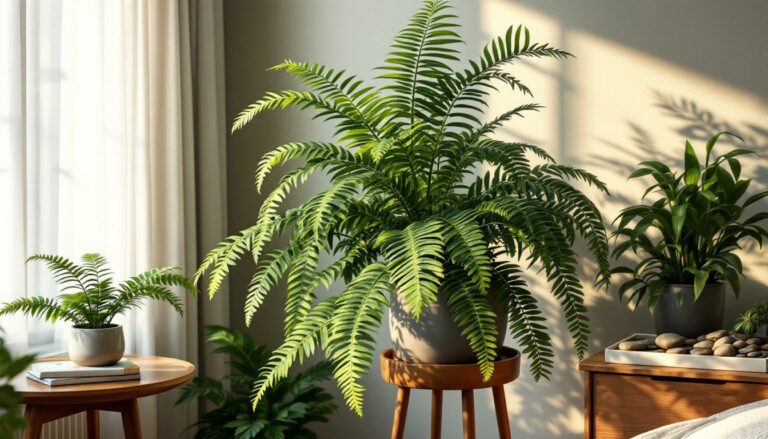
Pair bold, large-leaved plants (like monstera or rubber plant) with fine-textured foliage (ferns, asparagus fern, or Boston fern). The contrast is visually striking. Big, waxy leaves bounce light differently than delicate fronds, so grouping them together creates depth even in a small cluster.
Smooth, solid colors (like snake plant’s dark green) pair well with variegated or patterned plants. A variegated Pothos next to a solid ZZ plant doesn’t feel chaotic, it feels intentional. Similarly, glossy-leaved plants (anthurium, peace lily) next to matte-textured ones (caladium, prayer plant) add subtle visual complexity.
Think in terms of layers: tall plants at eye level or above, mid-height plants that fill visual gaps, and low trailing or compact plants that anchor the bottom. This three-layer approach works whether you’re clustering in a corner or arranging plants across a room.
Color matters too, though green dominates. A plant with red undersides (red prayer plant, red aglaonema) or variegated white-and-green foliage (Syngonium Podophyllum ‘Albo’) adds visual pop without feeling garish. It’s like adding an accent pillow to a neutral sofa, small but meaningful.
Consider that large indoor house plants create immediate impact when chosen for contrasting leaf shapes and sizes, so selecting complementary varieties is the key to making your arrangement feel cohesive rather than random.
Select Statement Plants as Focal Points
Every room needs a hero plant, one show-stopping specimen that anchors the space. This is your big, bold plant that commands attention and gives the room personality.
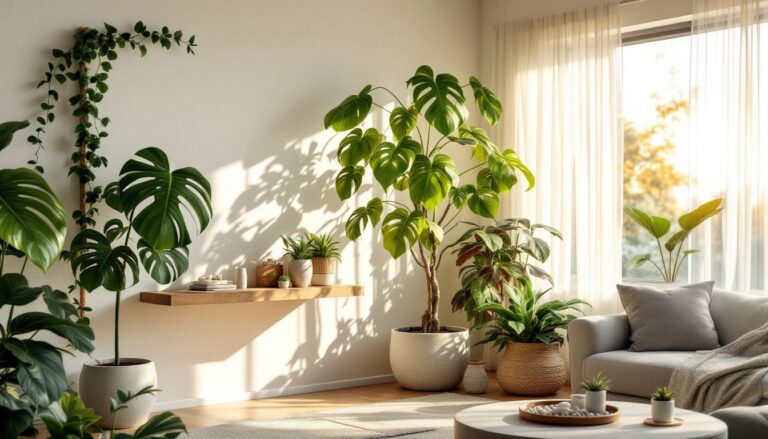
Statement plants are usually 3-5+ feet tall with substantial presence. Monsteras, bird of paradise, large-leaf ficus, rubber plants, and coolest house plants like the Alocasia make obvious choices because their size and leaf shape are immediately striking. Uncommon picks like a tall Dracaena marginata or a mature Clivia (Kaffir lily) work just as well if they suit your style.
Placement is everything. Position your statement plant where the eye naturally lands when you enter the room, beside a sofa, in a corner, or near a window. Avoid tucking it away: it’s meant to be seen. Give it a quality pot that complements your décor: the pot is part of the statement, not an afterthought.
Statement plants need consistent care. They’re usually more finicky than small plants because their size means they’re working harder metabolically. Most require bright, indirect light and consistent (not soggy) watering. Check soil moisture 2 inches down with your finger before watering.
If a statement plant starts looking thin or drops leaves, it’s often a light issue. Move it closer to a window or rotate it 90 degrees every week so all sides get light. Dust large leaves monthly with a soft cloth, clean leaves photosynthesize more efficiently. Research specific plant guides, such as 50 most common house plants to understand care requirements before buying.
Conclusion
Decorating your living room with indoor plants isn’t about filling every corner: it’s about intentional placement that creates visual flow, softness, and life. Start with one or two sections, maybe a corner cluster and a trailing plant, then expand as you get comfortable. Plants grow, sometimes slowly, sometimes explosively, so your arrangement will naturally evolve. The designs above work because they’re flexible: mix and match ideas based on your space, light, and lifestyle. Your living room will thank you for it.