Indoor plants brighten spaces and improve air quality, but many struggle without adequate light, especially in winter months or rooms away from windows. That’s where grow lights come in. Rather than hiding them behind closed doors, today’s homeowners are choosing stylish grow lights designed to complement their home décor while delivering the spectrum plants need. Whether you prefer sleek LED panels, decorative pendant lights, or modern floor fixtures, you can now prioritize plant health without sacrificing your interior design. This guide walks you through finding and installing grow lights that work as hard as they look.
Table of Contents
ToggleKey Takeaways
- Stylish grow lights eliminate the compromise between plant health and interior design, allowing indoor plants to thrive anywhere in your home while complementing your décor.
- Modern full-spectrum LED grow lights convert 40–50% of energy into usable light and pay for themselves within 1–2 years compared to traditional bulbs, despite higher upfront costs of $100–$400.
- LED panels, decorative pendants, and floor fixtures offer flexibility; choose based on your space, plant count, mounting options, and design style—from minimalist to farmhouse aesthetics.
- Most houseplants need 12–16 hours of consistent daily light; built-in timers and adjustable brightness controls remove guesswork and optimize photosynthesis.
- Install grow lights 12–24 inches above foliage, ensure proper air circulation with a small fan, and monitor leaf temperature to prevent light burn and heat stress.
- Low-to-moderate-light plants suit decorative options, while high-demand plants like succulents require more intense panels; pair fixtures strategically to balance aesthetics and horticultural capability.
Why Grow Lights Matter for Indoor Plant Success
Indoor plants need light, period. Most houseplants evolved under forest canopies or in bright, indirect outdoor conditions. Standard indoor ambient light rarely provides enough photosynthetically active radiation (PAR) for vigorous growth. Plants starved of proper light become leggy (stretching toward whatever light source is available), drop leaves, and slow growth to a crawl.
Grow lights solve this problem by emitting specific wavelengths that plants use for photosynthesis. Blue light promotes compact, leafy growth: red light encourages flowering and fruiting. Most full-spectrum LED grow lights emit both, mimicking natural sunlight in a controlled way.
Beyond plant health, stylish grow lights have become a legitimate design element. Rather than shoehorning an industrial shop light onto a shelf, you’re now choosing fixtures that blend seamlessly into living rooms, bedrooms, and offices. This shift means you don’t have to hide your plants in a basement or spare room, they can thrive anywhere in your home.
Types of Stylish Grow Lights to Elevate Your Space
LED Panel Lights and Modern Fixtures
LED grow panels are workhorses and come in sleek designs that don’t scream “grow tent.” Modern panels are slim, flat, and often available in matte black or white finishes that coordinate with contemporary décor. A typical 24-36 inch panel (such as full-spectrum 50-100W units) provides adequate light for a 2×2 or 3×3 foot plant cluster without excessive heat or power draw.
Look for panels with adjustable brightness and color temperature controls. This flexibility lets you dial in exactly what your plants need at different growth stages. Some premium models include built-in timers so you’re not manually switching them on and off, most plants thrive on 12-16 hours of daily light, depending on species.
Efficiency matters here. LED technology has evolved dramatically: older fluorescent or incandescent grow lights waste energy as heat. Modern full-spectrum LEDs convert 40-50% of input energy into usable light, compared to 10-15% for traditional bulbs. Your electricity bill will thank you, and your plants won’t get cooked.
One drawback: upfront cost runs $100–$400 for quality panels, versus $20–$50 for old-school shop lights. But if you keep plants for more than a year or two, LEDs pay for themselves.
Decorative Floor and Pendant Options
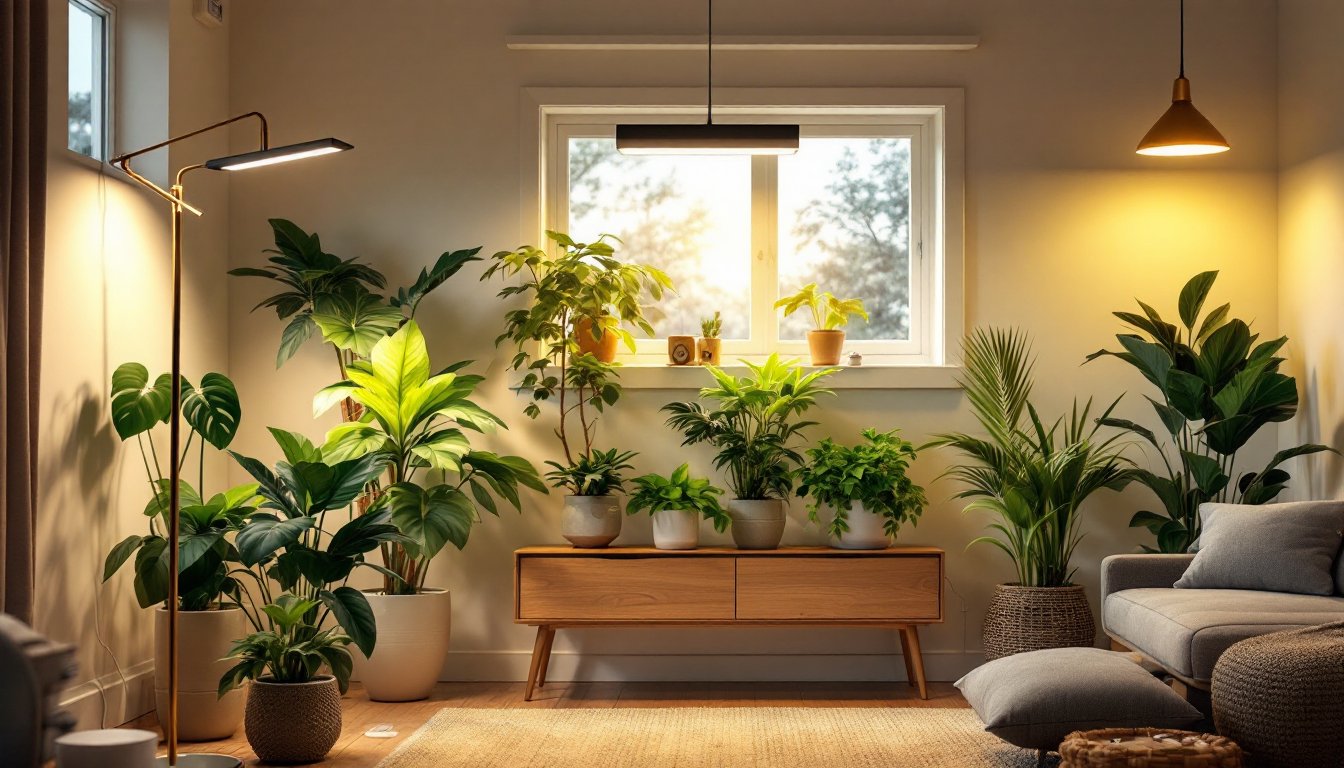
Not every grow light needs to mount overhead. Floor-standing grow light trees with multiple adjustable arms let you light several plants at different heights, and contemporary designs in brass, matte black, or wood tones read as sculptural décor rather than equipment. These work well in corners or beside seating areas where you want plants as part of the conversation, not hidden away.
Pendant grow lights hang like statement fixtures over a shelf, plant stand, or tabletop. Retailers now offer styles that mimic vintage Edison bulbs, minimalist geometric shades, or Scandinavian-inspired forms, all with full-spectrum LED internals. They’re particularly effective for a single focal plant or a small cluster, and they add ambient light to the room plus to supporting photosynthesis.
These decorative options sacrifice some intensity compared to flat-panel fixtures, so they’re best suited for low to moderate-light plants, pothos, philodendrons, snake plants, and begonias, rather than high-demand varieties like succulents or flowering houseplants. If you want both looks and capability, pair a subtle pendant with a lower-profile panel tucked behind or beneath a shelf.
How to Choose the Right Grow Light for Your Home Design
Start by assessing your space and plant needs honestly. Ask yourself: Are you lighting a single plant or a whole plant collection? Do you have overhead mounting options (ceiling, shelf brackets) or only floor or table space? What’s your interior style, industrial loft, farmhouse, minimalist, eclectic?
Light intensity and coverage are technical but crucial. Measure the area you want to illuminate and check the manufacturer’s PAR output at 12-24 inches (most specification sheets provide this). A rough rule: low-light plants need 200–500 μmol m⁻² s⁻¹ (micromoles per square meter per second): moderate plants need 500–1000: high-light plants need 1000+. Most stylish LED grow lights cluster in the moderate range.
Consider color temperature in both design and plant terms. Warm white lights (2700K) look cozy and coordinate with traditional décor but skew toward the red spectrum. Cool white (5000–6500K) looks brighter and supports vegetative growth but can feel clinical in living spaces. Neutral white (4000K) splits the difference and works well aesthetically and horticulturally.
Think about timing and automation. A light with a built-in timer removes guesswork. Most plants thrive on a consistent 12–16-hour photoperiod (light cycle). If you’re the type to forget to turn things off, a timer is non-negotiable.
Budget matters, but buying the cheapest fixture often means poor spectrum, weak output, or a short lifespan. A mid-range $150–$250 full-spectrum LED panel or $80–$150 decorative pendant will deliver results and last 5+ years. Bargain-basement options ($30–$50) may work for one or two tough plants but disappoint if you’re serious.
Installation Tips and Design Integration
Mounting is easier than you might think. For overhead panels, use adjustable hanging chains or brackets (available at hardware stores) so you can raise or lower the light as plants grow. Install it high enough that leaves don’t touch the fixture (risk of light burn) but close enough, typically 12–24 inches above foliage, to deliver adequate intensity.
If ceiling mounting isn’t an option, shelf-mounted or clamp-style fixtures work well. A rigid aluminum or steel shelf can hold a flat-panel light and several potted plants without sagging. Make sure your shelf is rated for the combined weight (a large panel plus soil and pots can exceed 20–30 pounds).
For pendant lights, follow the manufacturer’s hanging height guidance and use a ceiling hook or swag mount (rated for the fixture weight). Most pendants operate on standard household current: no special wiring is required. If you’re uncomfortable with any electrical work, call a licensed electrician, it’s a cheap professional task and keeps you safe.
Thermometer and humidity matter. Most plants like temperatures between 65–75°F. LED lights produce far less heat than older fixtures, but they’re not heatless. Ensure air circulation around the light and plants: a small oscillating fan on low helps prevent hot spots and keeps air fresh. Monitor leaf temperature (not ambient room temp) with an inexpensive infrared thermometer, if leaves exceed 80°F, raise the light higher.
Cord management and aesthetics: Hide power cords behind plants, under shelves, or along baseboards using discreet cord clips. Avoid running cords across walkways. Many modern grow lights come with fabric-covered cords or matte finishes that blend in better than shiny industrial fixtures.
If you’re incorporating grow lights into unusual house plants displays, position the light to showcase the plant’s form, not overshadow it. A light mounted slightly off-center above a tall plant draws the eye upward and creates a gallery-like effect. For large indoor house plants, consider a floor stand or multiple pendant lights at different heights to avoid over-shadowing the plant’s natural shape.
Design inspiration from sources like Gardenista and Country Living shows how real homes blend functional grow lights into their décor. Warm materials, wood plant stands, ceramic pots, linen-covered shelves, soften the technical side of grow lighting. Grouping plants at varying heights and light intensities creates depth and visual interest that’s genuinely attractive.
Conclusion
Stylish grow lights aren’t a compromise between plant health and home aesthetics, they’re the solution. By choosing the right fixture type, intensity, and design for your space and plant collection, you can grow thriving houseplants anywhere in your home, not just windowsills. Whether it’s a sculptural floor lamp, a sleek pendant, or a slim overhead panel, today’s options prove that grow lights can be both functional and beautiful. Start with one quality fixture, dial in your plants’ needs, and expand from there. Your home will look greener, and your plants will thank you.