Arlington homeowners face distinct seasonal demands on their HVAC systems, scorching summers that push air conditioning to the limit and mild winters that still require reliable heating. Proper HVAC maintenance isn’t just about comfort: it’s about extending equipment life, maintaining warranty coverage, and avoiding expensive emergency repairs when temperatures spike. This guide walks through the practical maintenance tasks that keep your system running efficiently year-round, from spring inspections to winter prep. You’ll learn which jobs you can tackle yourself and when it’s time to call in a licensed technician.
Table of Contents
ToggleKey Takeaways
- HVAC maintenance in Arlington is essential to extend equipment life, preserve warranty coverage, and avoid expensive emergency repairs during hot summers and occasional cold snaps.
- Spring pre-season checks for cooling—including outdoor unit inspection, filter replacement, and thermostat testing—take just 30–45 minutes and prepare your system for Arlington’s punishing summers that exceed 95°F.
- Replacing your return-air filter every 30–90 days is the single most important DIY task that lowers energy bills, prevents blower damage, and costs just $5–15 per filter.
- A well-maintained HVAC system runs 10–15% more efficiently than a neglected one, translating to significant utility savings over its 15–20-year lifespan.
- Professional HVAC maintenance for refrigerant work, electrical repairs, and annual inspections requires an EPA-certified technician; homeowners should focus on filter changes, visual inspections, and outdoor unit cleaning.
- Annual professional HVAC service costs $100–200 and is a small investment compared to the $5,000+ cost of emergency component replacement or voided warranty coverage.
Why Regular HVAC Maintenance Matters for Arlington Homeowners
An HVAC system without regular maintenance is like a car without oil changes, it’ll run for a while, but failure is inevitable. Neglected systems work harder, consume more energy, and fail when you need them most.
Routine maintenance catches small problems early. A refrigerant leak, a clogged filter, or a worn blower motor bearing can all be addressed before they cascade into a $5,000 replacement. Arlington’s hot summers mean cooling systems run hard from May through September: a system that isn’t cleaned and checked beforehand will strain under peak load.
Your equipment manufacturer likely requires annual professional service to honor the warranty. Skipping maintenance voids coverage, leaving you fully liable for repairs or replacement. Beyond warranty protection, a well-maintained system runs 10–15% more efficiently than a neglected one, which directly lowers your utility bills. Over a system’s typical 15–20-year lifespan, that efficiency gap translates to real savings.
Spring and Summer HVAC Preparation for Arlington’s Climate
Arlington summers are punishing. Daytime temperatures routinely exceed 95°F from June through August, and your AC will be the hardest-working appliance in your home. Spring is when you prep your system to handle that load.
Essential Pre-Season Checks
Start in late March or early April, before the heat arrives. Your checklist:
Outdoor Unit Inspection:
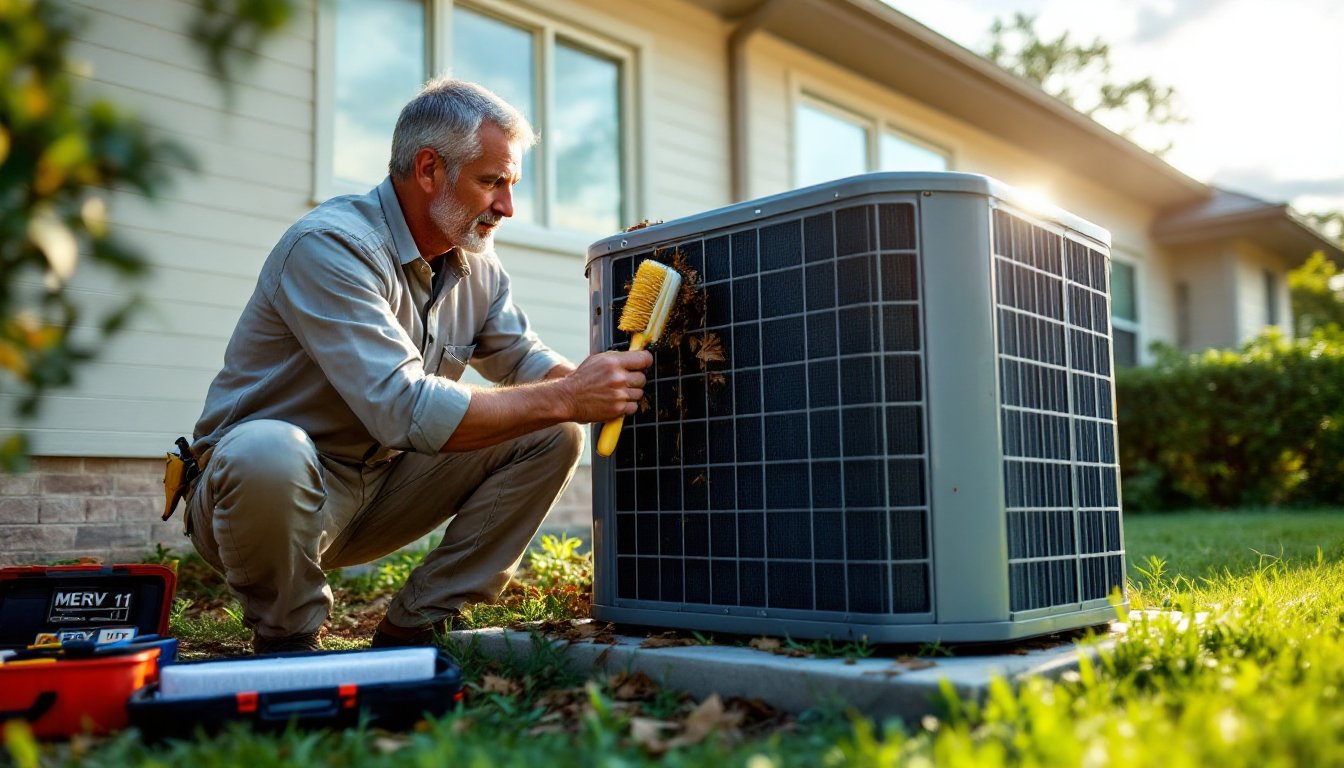
- Clear any leaves, twigs, or debris from the condenser coil fins. Use a soft brush or a plastic-tooth broom: never a pressure washer, which can bend the aluminum fins and reduce cooling efficiency.
- Check that the unit sits level. If it’s settled unevenly, water won’t drain properly from the condensate pan, risking mold and water damage. If settling is severe, a professional needs to address it.
- Ensure shrubs or grass aren’t within 2 feet of the unit. Airflow restriction raises temperature and reduces efficiency.
Indoor Unit and Ductwork:
- Inspect the furnace or air handler for visible corrosion, loose bolts, or signs of leaks around the condensate drain pan.
- Replace the main return-air filter. Most homeowners should do this every 30–90 days depending on filter type and household dust load. During summer, when the AC runs continuously, check it monthly. A MERV 8 or MERV 11 filter is standard for most residential systems: higher MERV ratings restrict airflow and can strain the blower motor. Follow your system’s manual or ask your technician what rating suits your setup.
- Visually inspect visible ductwork for gaps, loose connections, or damage. Gaps can leak 15–30% of conditioned air before it reaches the room.
Thermostat Check:
- Test that your thermostat accurately reads room temperature. Set it 5 degrees below current room temperature, listen for the AC to kick on within 2–3 minutes, and verify that cool air flows from the supply registers.
- If you use a programmable or smart thermostat, reprogram it for summer schedules (typically warmer setpoints when no one’s home during the day).
These checks take 30–45 minutes and cost nothing if you already own a flashlight and a basic screwdriver. AC Maintenance and Repair: covers deeper maintenance strategies for the cooling season. If you discover refrigerant leaks, cracked coils, or electrical damage, stop and call a licensed technician, these require specialized tools and certification.
Fall and Winter HVAC Maintenance Tasks
As temperatures drop in October and November, shift focus to your heating system. A furnace that’s gone unused since spring may have accumulated dust, and any electrical connections may have corroded.
Pre-Heating Season Maintenance:
- Replace the return-air filter again. Summer dust accumulation is heavy.
- Inspect the furnace cabinet and blower assembly for dust. Use a vacuum with a brush attachment to gently remove dust from accessible surfaces. Do not open the furnace cabinet unless your manual explicitly permits it and you’re comfortable working around electrical components.
- Check the condensate drain line. If your furnace is a high-efficiency model (95%+ AFUE), it produces condensation during operation. Verify that the drain line isn’t clogged and that water flows freely into the drain pan.
- Test your furnace by setting the thermostat 5 degrees below room temperature. The system should cycle on within 2–3 minutes. Listen for the blower to ramp up smoothly and check that warm air flows from all supply registers evenly.
- If you have a gas furnace, check the pilot light (on older models) or verify ignition is functioning on newer models. You shouldn’t hear unusual clicks, pops, or grinding sounds during the heating cycle.
Seasonal Adjustments:
- Ensure that return-air vents aren’t blocked by furniture, curtains, or closed doors. Restricted return airflow forces the blower to work harder and reduces efficiency.
- Verify that your thermostat isn’t located near a heat source (lamp, sunny window, kitchen) that could cause false readings.
Winter maintenance is lighter than spring prep because the heating season is shorter in Arlington. Still, a 30-minute checkup prevents avoidable winter discomfort and keeps the system ready for occasional cold snaps.
DIY HVAC Maintenance Tasks Any Homeowner Can Handle
You don’t need a contractor’s license to perform basic maintenance. These tasks are safe, cost-effective, and measurably improve performance.
Filter Replacement:
This is the single most important DIY task. A clogged filter forces your system to work harder, raises energy bills, and can damage the blower motor over time. Replace or clean your filter every 30–90 days. Standard filters cost $5–15: premium pleated or electronic filters run $20–50. Installing one takes two minutes: turn off the system, locate the filter housing (usually in a return-air duct or on the furnace cabinet), slide out the old filter, and slide in the new one with the arrow pointing in the direction of airflow.
Outdoor Unit Cleaning:
Your hands and simple tools are enough. Use a soft brush or compressed air to remove leaves and debris from the condenser fins. If you use compressed air, hold the can upright and spray in short bursts to avoid freezing the tip. Never pressure-wash, hammer, or bend the fins.
Visual Inspections:
Monthly, walk around both your outdoor and indoor units. Look for:
- Visible corrosion or rust (reddish discoloration on metal surfaces).
- Loose bolts or fittings (tighten carefully with an appropriately sized wrench).
- Water pooling around the indoor unit or dripping from the condensate drain (indicates a clogged drain).
- Unusual noises or vibrations during operation.
These checks take 5–10 minutes and help you catch problems early. According to HomeAdvisor, homeowners who perform routine maintenance average 20% lower repair costs over a system’s lifetime.
When to Call a Professional HVAC Technician in Arlington
Some jobs absolutely require a licensed, EPA-certified technician. Don’t attempt them yourself.
Refrigerant Work:
Refrigerant leaks, charging, or recovery requires EPA Section 608 certification. Mishandling refrigerant damages the ozone layer and violates federal law. If your system is losing cooling performance even though filter changes and coil cleaning, refrigerant may be involved. Call a pro.
Electrical Repairs:
Furnaces, air handlers, and compressors use high-voltage components that can cause serious injury or death if miswired. If you suspect a tripped breaker, a failed contactor, or a burned capacitor, schedule a service call. Do not open electrical panels unless you’re trained.
Major Component Replacement:
A failing compressor, blower motor, or heat exchanger requires professional replacement, testing, and system balancing. Improper installation voids warranties and creates safety risks.
Annual Professional Service:
Most manufacturers and best practices recommend one professional inspection per year, either in spring or fall, depending on whether you prioritize cooling or heating. A technician will:
- Test refrigerant charge and pressure.
- Clean coils and fins thoroughly.
- Inspect electrical connections and test capacitors.
- Verify that the system cycles properly.
- Check ductwork for leaks and balance airflow.
Annual service costs $100–200 per visit, a small price against the cost of a failed system or inflated energy bills. Top 10 Best Heating lists vetted contractors in your area. If you don’t have a regular technician, ask neighbors for recommendations or check online reviews. For urgent repairs, don’t delay, a broken AC in July or a failed furnace in January is far more expensive than preventive service. Resources like Popular Mechanics provide detailed guides to understanding HVAC systems, but hands-on diagnostics and repairs demand professional expertise.
Conclusion
HVAC maintenance in Arlington is a straightforward rhythm: spring cooling prep, summer vigilance, fall heating setup, and winter monitoring. Handle the simple tasks yourself, filter changes, visual inspections, outdoor cleaning, and schedule professional service annually. A well-maintained system keeps your home comfortable, runs efficiently, and lasts decades. Skip maintenance, and you’ll pay far more in repairs and wasted energy than you’d ever spend on prevention.