Finding tiny bugs crawling around your indoor plants can feel like an unwelcome invasion, and it’s frustrating because you’re doing everything right. The reality is that spider mites, mealybugs, scale insects, and fungus gnats don’t discriminate between a beginner’s plant collection and a seasoned gardener’s jungle. Once they move in, they spread fast, weakening your plants by sucking sap, leaving sticky residue, or munching through leaves. The good news is that you don’t need harsh chemicals or a degree in entomology to fix the problem. This guide walks you through identifying what’s eating your plants and shows you seven practical, tested methods, from simple soap sprays to strategic isolation, that actually work without turning your home into a toxic cloud.
Table of Contents
ToggleKey Takeaways
- Getting rid of bugs on indoor plants starts with identifying the pest type—spider mites, mealybugs, scale insects, fungus gnats, or thrips—since each requires a slightly different treatment approach.
- A simple water and soap spray solution is your safest first line of defense for light to moderate infestations; apply every 3 days for 2–3 weeks to catch bugs at different life stages.
- Isolate infested plants immediately in a separate room or space for at least three weeks to prevent pests from spreading to your healthy collection.
- Fix the root causes by reducing overwatering, improving air circulation, and maintaining proper humidity levels—these environmental changes prevent future infestations and support plant recovery.
- Use neem oil for tougher pests like scale insects and fungus gnats when soap spray doesn’t work after three weeks, or escalate to professional pest control if the infestation spreads to multiple plants.
- Most indoor plant pest problems can be solved without harsh chemicals through consistent natural methods combined with better plant care habits.
Identify Common Indoor Plant Pests
Before you start spraying anything, take a close look at what you’re dealing with. Indoor plant pests usually fall into a few categories, and each one demands a slightly different approach.
Spider mites are nearly invisible, you’ll notice fine webbing on stems and leaves before you spot the actual bugs. They thrive in warm, dry conditions and multiply like crazy. Mealybugs show up as white, cottony clusters in leaf joints and along stems. Scale insects look like tiny brown bumps stuck to branches and the undersides of leaves: they’re hard to squish and don’t move much. Fungus gnats are those tiny dark flies that swarm around soil when you water: they’re usually a sign your soil is staying too wet. Thrips are slender, barely visible insects that leave silvery streaks on leaves and flowers.
The easiest way to spot trouble early is a quick weekly inspection. Look at the undersides of leaves where pests like to hide, check leaf joints, and scan the soil surface. Caught early, most infestations are manageable in a few weeks. Caught late, you might be dealing with damage that takes months to recover from.
Natural Treatment Methods
If you prefer to skip the synthetic pesticides, natural solutions work surprisingly well, especially for light to moderate infestations. The key is consistency: you’ll need to treat every few days for at least two to three weeks to catch bugs at different life stages.
Water and Soap Spray Solution
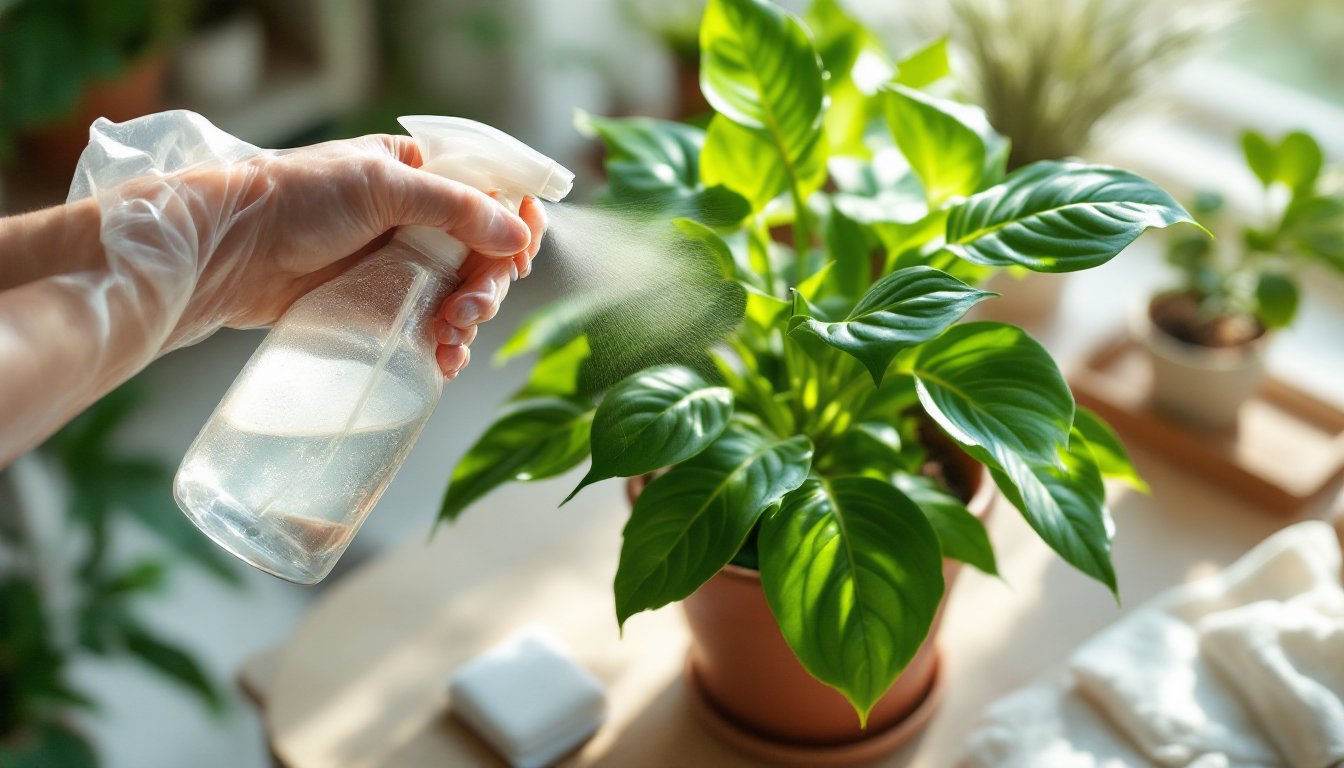
This is your first line of defense and honestly the safest option. Mix 1 tablespoon of mild liquid dish soap (not degreaser or antibacterial formula) with 1 quart of water. Pour it into a spray bottle and apply it generously to both sides of leaves, stems, and soil surface until everything glistens. The soap breaks down the waxy outer coating on soft-bodied pests like mealybugs and spider mites, causing them to dehydrate.
Spray in the early morning or late evening to avoid leaf burn. Wait 48 hours before reapplying. Isolate treated plants from untreated ones so you’re not reinfecting your own collection. Wear gloves and wash your hands afterward. This method won’t work on scale insects (their hard shells resist soap) or severe infestations, but it’s your go-to for catching problems early.
Neem Oil Applications
Neem oil is pressed from the neem tree seed and disrupts pest reproduction and feeding. Mix 2 tablespoons of pure neem oil concentrate with 1 quart of water and a few drops of dish soap (the soap helps it spread evenly). Spray the same way as the soap solution, early or late in the day, coating all leaf surfaces and stems.
Neem oil takes longer to show results than soap spray (usually 5–7 days), but it’s more effective on tough pests like scale and fungus gnats. The downside: it smells awful and can damage certain delicate plants. Always test a small section of your plant 24 hours before doing a full treatment. Repeat applications every 7–14 days for three to four weeks. Store neem oil in a cool, dark place: it breaks down quickly in sunlight.
Isolation and Prevention Strategies
The second you notice bugs, physically separate that plant from your healthy collection. Set it in a different room, a garage, or even outside if temperatures allow. This stops pests from hitchhiking to your other plants on a touched leaf or a wayward spider web. Keep the infested plant isolated for at least three weeks after the last sign of pest activity.
Meanwhile, fix the conditions that invited bugs in the first place. Overwatering is the number-one culprit, it creates soggy soil where fungus gnats thrive. Water only when the top inch of soil feels dry to the touch. Low humidity and heat from heaters or AC units push spider mite populations skyward: mist plants occasionally or group them together to raise local humidity. Poor air circulation traps moisture and encourages fungal issues: position a small fan nearby to keep air moving gently.
When you do repot or prune, use clean tools (wipe blades with rubbing alcohol) and fresh potting soil. If you’re bringing home a new plant from a nursery or friend’s place, quarantine it for two weeks before adding it to your collection. One infested newcomer can reset all your progress. These habits sound tedious, but they’re far cheaper and less stressful than fighting an outbreak later.
When to Use Insecticidal Options
Natural methods work for most cases, but sometimes you need stronger tools. If an infestation has spread to multiple plants, is causing visible leaf drop, or hasn’t budged after three weeks of soap and neem oil, it’s time to consider a synthetic option.
Horticultural oils (like superior oil) are less toxic than traditional insecticides and coat pests on contact, suffocating them. Insecticidal soaps are similar but formulated specifically for indoor use. Spinosad is a fermentation byproduct that disrupts insect nervous systems and works on thrips, fungus gnats, and mealybugs. Pyrethrin comes from chrysanthemum flowers and is relatively low-toxicity compared to older chemicals.
Always follow label instructions exactly, don’t increase concentration or frequency thinking it’ll work faster. It won’t: it just risks damaging your plant and your home. Wear gloves, eye protection, and a mask if using powder formulas. Apply in a well-ventilated space or outdoors if possible. Keep treated plants away from pets and children for 24–48 hours. If you’re uncomfortable applying anything yourself, or if the infestation is severe, call a professional pest control service licensed for indoor plants. There’s no shame in that: some infestations are legitimately beyond a DIYer’s scope. Professionals can also identify pests you might have missed and recommend targeted solutions you can’t find in a hardware store.
Conclusion
Indoor plant bugs are annoying but beatable. Start with identification, move to isolation and cleaning, and escalate only if natural methods don’t work. Most homeowners solve their pest problems with a few rounds of soap spray and better watering habits, no chemistry degree required. Stay consistent, be patient, and remember that your plants will bounce back. Healthier plants with proper light, humidity, and drainage resist pests far better than stressed ones anyway.