Most indoor plant parents kill with kindness, and nothing kills faster than over-fertilizing. Whether you’ve got a fiddle leaf fig struggling in the corner or a collection of succulents on your windowsill, figuring out how often to fertilize indoor plants is one of the most misunderstood aspects of plant care. Unlike outdoor gardens where nutrients leach away with rain and seasonal cycles reset expectations, indoor plants live in confined pots with limited nutrient cycles. The stakes feel higher because your plants depend entirely on you. This guide cuts through the guesswork and gives you a practical, realistic schedule for fertilizing indoor plants based on their actual growth cycles, pot size, and light conditions.
Table of Contents
ToggleKey Takeaways
- Most indoor plants only need fertilizing every two to four weeks during spring and summer growth season, while dormant winter months require minimal or no fertilizer.
- Light conditions are the primary factor determining fertilizer frequency—plants in bright south-facing windows need more nutrients than those in low-light corners.
- Over-fertilizing is the leading cause of damage to indoor plants; excess salt buildup burns roots and causes brown leaf tips, making under-fertilizing the safer approach.
- Repotting your indoor plants every 12–18 months with fresh potting soil resets nutrient levels and reduces the need for strict fertilizing discipline.
- Watch for slow growth, pale lower leaves, and smaller new growth as signals that your plant needs fertilizer, and always diagnose watering or light issues before adding nutrients.
Understanding Your Indoor Plant’s Fertilizer Needs
Indoor plants don’t need as much fertilizer as you’d think. In fact, most houseplants grown in typical indoor light conditions are dormant or semi-dormant for at least six months of the year. They’re not photosynthesizing at full throttle like outdoor plants in summer sun, so their nutrient demands drop significantly.
When you buy potting soil, it usually comes pre-loaded with nutrients that last about three to six months. That initial boost means your plant isn’t actually starving in month one or two, it’s just using what’s already there. Once those nutrients deplete, the plant starts sending signals. A slow growth rate, pale or yellowing lower leaves, and smaller-than-normal new growth are classic signs.
The key variable is light. A plant sitting six feet from an east-facing window isn’t photosynthesizing at the same rate as one on a south-facing sill. The dimmer the light, the less energy the plant produces, and the fewer nutrients it needs. A pothos in a low-light corner might only need fertilizer once every two months, while a bright-light peperomia might need it monthly. Plant type matters too, fast-growing vining plants and those with soft, tender foliage (like coleus) consume nutrients faster than slow-growing succulents or snake plants.
Seasonal Fertilizing Schedules That Actually Work
Spring and Summer Feeding
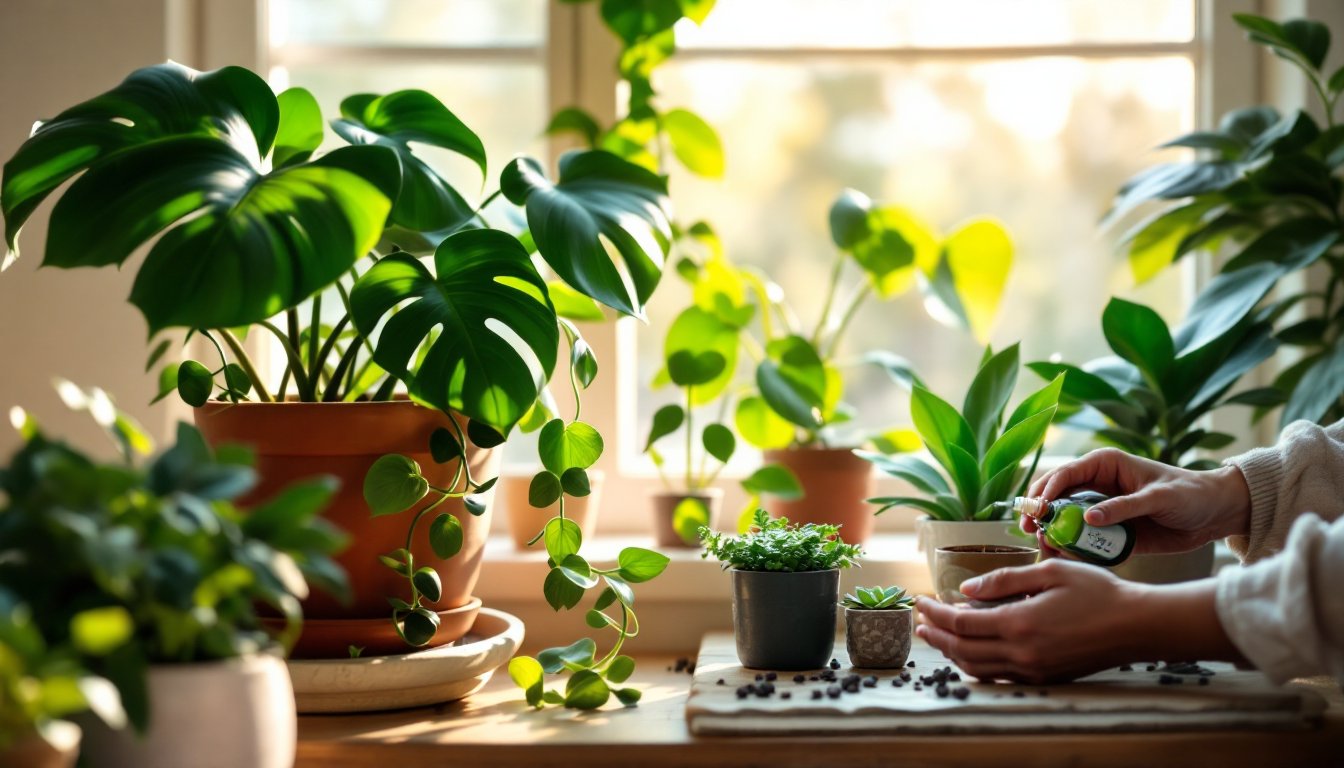
Spring is when your indoor plants wake up. Days get longer, light intensity increases, and plants shift from maintenance mode into active growth. This is when you should increase fertilizing frequency. For most tropical houseplants (philodendrons, monsteras, and rubber plants), a balanced liquid fertilizer applied every two to four weeks during the growing season works well. Some fast growers in bright conditions might handle weekly feedings, but that’s the exception.
When to fertilize indoor plants during summer depends on whether your plant is indoors year-round or occasionally moves outside. Indoor-only plants still follow the spring-to-summer rhythm, but their growth will level off earlier than outdoor plants because supplemental light can’t match natural summer intensity. If you’re using a diluted fertilizer at half-strength, you can safely fertilize every two weeks without risk of salt buildup. This is also a good time to switch to a fertilizer higher in nitrogen (the first number in the N-P-K ratio) if you want to promote leafy growth.
Fall and Winter Adjustments
Come September, growth slows. Your plant isn’t being lazy, it’s responding to shorter days and lower light levels, which is completely natural. This is when you should taper off fertilizing. Most indoor plants need fertilizing only once a month or even less frequently during fall. By winter, many houseplants are effectively dormant and need little to no fertilizer.
For winter, I’d recommend cutting back to every six to eight weeks for slower-growing plants, and skipping fertilizer entirely for low-light specimens. Succulents and cacti especially should get minimal fertilizer in winter, their growth has essentially stopped, and extra nutrients just sit in the soil, potentially causing root rot. This isn’t neglect: it’s respecting the plant’s natural cycle. Water less frequently too, and you’ll keep your plants healthier than if you force-feed them all year.
Signs Your Indoor Plants Need Fertilizer
Reading your plant’s body language beats any rigid schedule. Slow growth is the most obvious signal, if new leaves are emerging smaller than usual or growth has stalled, nutrient deficiency is likely. Pale or yellowish lower leaves that eventually drop off (not just normal leaf loss) often indicate nitrogen depletion. A reddish tint on stems or undersides of leaves sometimes points to phosphorus deficiency, though some plants do this naturally.
Browsing resources like The Spruce can help you learn plant-specific signs, since each species shows nutrient stress differently. A monstera might get soft new leaves, while a jade plant might produce smaller growth overall. If you’ve ruled out light and watering issues and the plant still looks hungry, fertilizer is your next step.
One trick: repot your plant every 12–18 months into fresh potting soil. This resets your nutrient clock without requiring strict fertilizing discipline. Fresh soil contains enough nutrients to carry most plants for months, making the whole process simpler. You’ll waste less fertilizer and reduce the risk of salt buildup, which causes brown leaf tips and stunted growth.
Common Fertilizing Mistakes to Avoid
The number-one mistake is over-fertilizing. People assume that if some nutrients are good, more must be better. Wrong. Excess fertilizer salts accumulate in soil, burning roots and causing brown, papery leaf edges. Once this happens, the only fix is flushing the soil thoroughly with water and waiting for new growth to recover, which can take months. If you’re a nervous plant parent, go with diluted fertilizer at half-strength on a regular schedule rather than full-strength doses spread far apart.
Another common error is fertilizing a struggling plant. If your plant is wilting, sitting in soggy soil, or showing yellowing across the entire plant (not just lower leaves), fertilizer won’t help, it’ll make things worse. A struggling plant can’t process nutrients properly. Diagnose the actual problem first: is the soil too wet? Too dry? Not enough light? Fix the root cause before adding fertilizer.
Don’t fertilize newly repotted plants for at least a month. Fresh potting soil already has nutrients, and adding fertilizer on top risks burning tender new roots. Similarly, skip fertilizer for sick or dormant plants in winter. According to resources on how to save a dying houseplant, overfeeding a weakened plant is a common pitfall that delays recovery. Use a slow-release fertilizer or liquid concentrate diluted to half-strength, not a quick-release formula that dumps everything at once. For large indoor house plants especially, consistent, gentle feeding beats occasional heavy doses.
Conclusion
Fertilizing indoor plants isn’t complicated once you match your schedule to the plant’s natural growth rhythm. Spring and summer mean more frequent feeding: fall and winter mean you back off. Pay attention to light conditions, pot size, and what the plant is actually telling you through its leaves. Most indoor plants thrive on a simple spring-to-summer schedule of every two to four weeks, then a slowdown in fall and minimal input in winter. When in doubt, under-fertilize rather than over-fertilize, it’s easier to add nutrients than to remove excess salt buildup. Your plants will reward consistency and patience.