Your living room is often the heart of your home, the place where you relax, entertain, and spend quality time. Adding indoor plants doesn’t just fill empty corners: it breathes life into the space while improving air quality and boosting your mood. Whether you’re a seasoned gardener or someone who’s struggled to keep a cactus alive, there’s a low-maintenance plant waiting for your living room. In 2026, indoor plants have become a smart home investment, blending function with aesthetics. This guide walks you through selecting, placing, and caring for indoor plants that’ll thrive in your space without demanding constant attention.
Table of Contents
ToggleKey Takeaways
- Indoor plants for your living room improve air quality, reduce stress, and lower blood pressure while adding visual interest without renovation costs.
- Low-maintenance plants like pothos, snake plant, and ZZ plant thrive on neglect and tolerate low light, making them ideal for busy homeowners or dim spaces.
- Assess your living room’s lighting conditions first—bright indirect light, low light, or medium light—to select plants that will thrive without supplemental grow lights.
- Overwatering is the leading cause of plant failure; check soil moisture with your finger and water only when the top inch feels dry.
- Strategic placement using odd numbers of plants, varying heights, and complementary textures creates visual rhythm and ensures accessibility for watering and care.
- Maintain humidity through grouping plants together, using pebble trays, or misting, and keep temperatures between 60–75°F to prevent stress and soil dryness.
Why Indoor Plants Are Essential for Your Living Room
Indoor plants transform your living room in ways that go beyond decoration. They filter airborne toxins like formaldehyde and benzene, improving the air you breathe daily. Studies consistently show that plants reduce stress, lower blood pressure, and increase productivity, all benefits you’ll notice just by sitting near them.
From a design perspective, plants break up hard architectural lines and add visual interest without the cost of a renovation. A tall fiddle leaf fig in the corner, trailing pothos along a shelf, or a cluster of small succulents on a console each tells a different design story. The beauty is you’re not locked into one aesthetic: plants work with modern minimalist rooms, bohemian spaces, and traditional living areas equally well.
Beyond the personal payoff, living plants signal intention and care in a room. They show guests that you’ve thought about the space. And unlike cut flowers that wilt in two weeks, a healthy indoor plant is a living investment that can last years or even decades with basic care.
Best Low-Maintenance Plants for Living Room Spaces
If you’ve hesitated to add plants because you travel, forget to water things, or have dim corners, breathe easy. Some of the toughest, most attractive plants are designed for hands-off care.
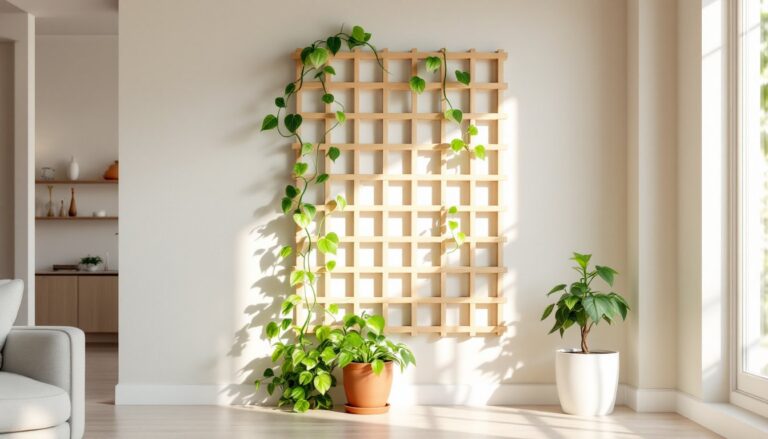
Pothos (also called Devil’s Ivy) is nearly impossible to kill. It tolerates low light, irregular watering, and trailing growth that works beautifully on shelves or hanging from wall mounts. Snake plants (Sansevieria) are equally forgiving, they thrive on neglect and actually prefer drier soil. Both purify air aggressively and grow steadily without fussing.
ZZ plants handle low light and irregular schedules. Monstera deliciosa creates that big, architectural presence while tolerating moderate indirect light. Rubber plants (Ficus elastica) offer bold foliage and adapt to various light conditions. For smaller spaces or shelves, calathea, prayer plants, and peperomia deliver visual interest with manageable care demands.
Fiddle leaf figs are popular but pickier, they like consistent, indirect bright light and hate being moved. If your living room gets strong, consistent natural light away from direct sun, they’ll reward you. Otherwise, start with the forgiving trio: pothos, snake plant, and ZZ plant.
You’ll find large indoor house plants useful if you’re aiming for dramatic impact, while common succulent house plants suit minimalist living rooms and tight spaces.
Choosing Plants Based on Lighting Conditions
Light is the single biggest factor in plant survival. Before picking plants, assess your living room’s light honestly.
Bright, indirect light (near a north or east-facing window, or a few feet from a south or west-facing window) supports most plants. Pothos, monstera, fiddle leaf fig, and rubber plant thrive here. Low light (corners away from windows, hallway entries) calls for pothos, ZZ plant, and snake plant, species evolved to survive on forest floors with dappled sunlight. Medium light (indirect from a south-facing window, or filtered through sheer curtains) opens up options: calathea, prayer plants, and neon pothos.
If your living room is dim but you want more variety, consider supplementing with a basic full-spectrum grow light (12–24 watts, around $15–40). Position it 6–12 inches above the plant. This removes the guesswork and lets you place plants where they look best, not just where light allows.
Direct afternoon sun through unfiltered windows can scorch leaves on tropical plants. If you have a bright, sunny corner, lean into sun-tolerant choices like succulents, aloe, or sansevieria, or use a sheer curtain to diffuse the intensity.
Designing and Positioning Plants in Your Living Room
Strategic placement makes plants part of your room’s layout, not afterthoughts crammed into gaps.
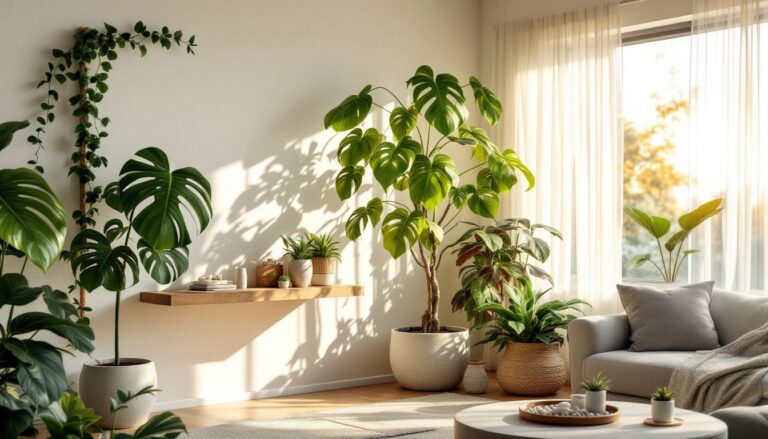
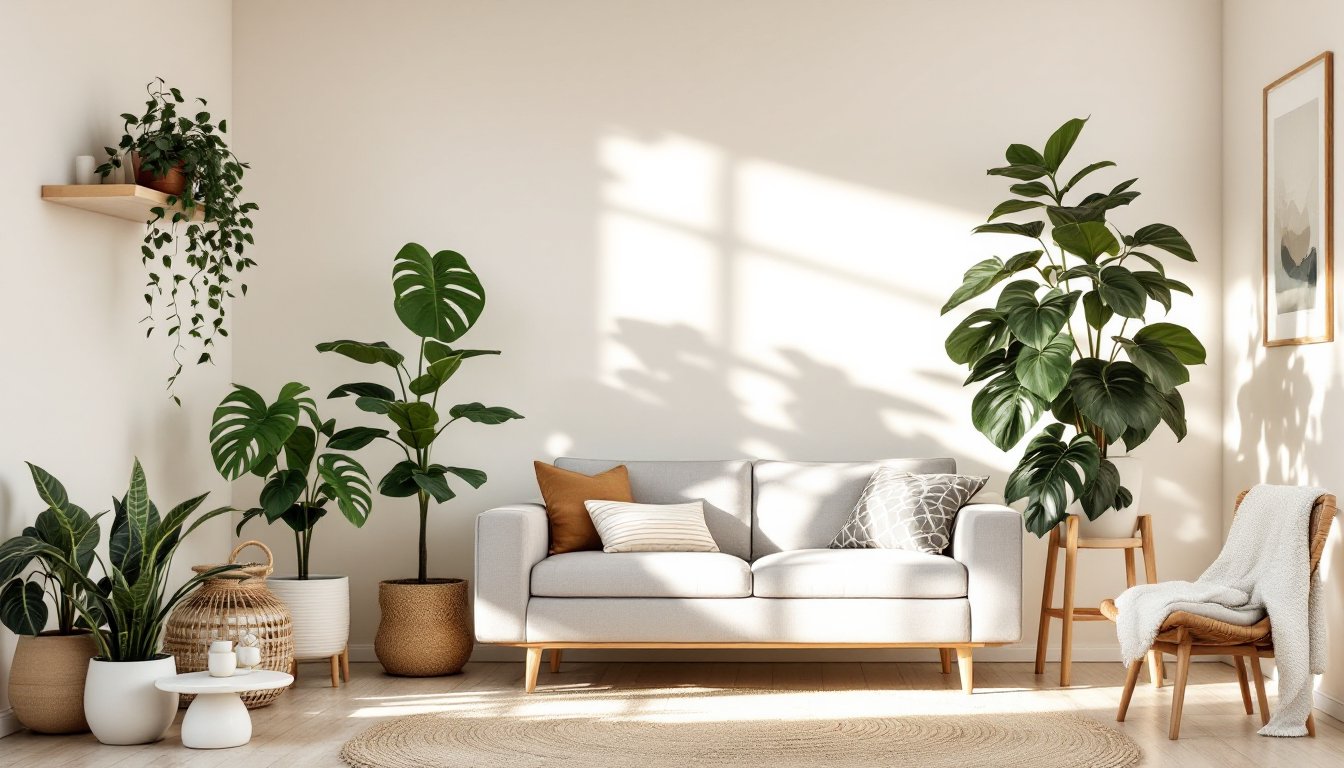
Scale and proportion matter. A single, large plant (3–4 feet tall) anchors a corner or beside a sofa. A cluster of three to five smaller plants on a shelf, console, or plant stand creates a focal point without overwhelming the space. Odd numbers (three, five, seven plants) feel intentional: even groupings sometimes read as accidental.
Height variation adds visual rhythm. Mix floor-standing plants, tabletop planters, and trailing plants on shelves. A tall fiddle leaf fig paired with a low-growing pothos trailing from a bookshelf is more dynamic than plants all at the same height.
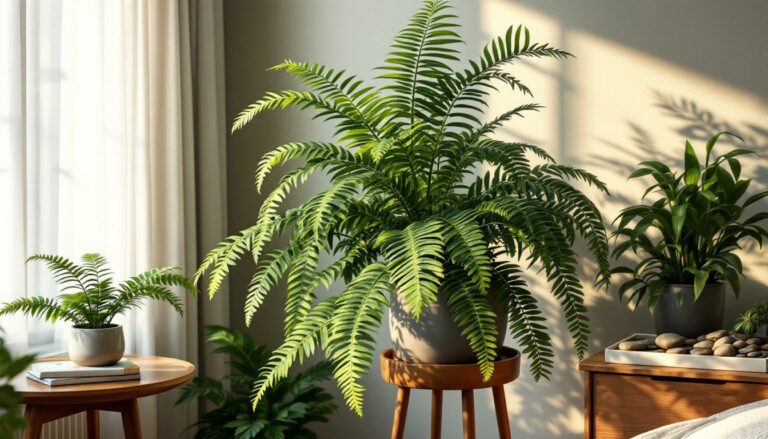
Color and texture should complement your room. Deep green foliage suits almost any palette, but variegated plants (like syngonium or calathea with white or pink markings) brighten neutral rooms. Texture matters too: the feathery look of asparagus fern versus the bold, architectural lines of a snake plant create different moods.
Consider interior design tips for broader styling guidance. Placement also affects plant health: avoid spots directly above heating vents, air conditioning outlets, or drafty windows. These stress plants and dry out soil faster. Position plants where you’ll actually water them, not hidden in a corner you forget exists. Accessibility trumps aesthetics: a thriving plant in a visible spot beats a struggling plant in the “perfect” location.
Essential Care Tips for Healthy Indoor Plants
Successful plant ownership boils down to understanding three core needs: water, light, and environment. Most DIYers kill plants through overwatering, not neglect. Roots sitting in waterlogged soil rot within days. The solution: check soil moisture before watering. Stick your finger 1–2 inches into the soil. If it feels moist, wait a few days. Only water when the top inch is dry.
Drainage is non-negotiable. Every pot must have drainage holes. Terracotta breathes naturally but requires more frequent watering: ceramic and plastic retain moisture longer. Use a saucer or tray to catch excess water, empty it after 15 minutes so roots don’t sit in standing water.
Seasonal rhythms matter. During winter (when most homes have heating on and days are shorter), plants slow growth and need less water. You might water every 10–14 days instead of weekly. Spring and summer reverse this: growth accelerates and soil dries faster.
Leaves collect dust over time, which blocks photosynthesis. Wipe large-leaved plants (monstera, rubber plant, fiddle leaf fig) monthly with a soft, damp cloth. Use room-temperature distilled water, not tap water, chlorine and minerals can damage delicate foliage.
You can explore viney house plants and coolest house plants for additional variety in low-maintenance options.
Watering, Humidity, and Temperature Requirements
Watering frequency depends on plant type, pot size, soil composition, light, and season. Snake plants and succulents want drier conditions, water every 2–3 weeks. Pothos and monstera prefer soil that’s rarely bone-dry but never soggy, aim for weekly checks. Calathea, begonias, and humidity-loving plants need more consistent moisture but still need to dry slightly between waterings. Don’t follow a rigid schedule: instead, develop a habit of checking soil before watering.
Humidity is where most living rooms fall short. Tropical plants (calathea, prayer plant, monstera) evolved in humid forests: dry, heated homes stress them. Increase humidity by grouping plants together (they release moisture as they transpire), setting pots on pebble trays filled with water (the pot sits on pebbles above the water line, not touching it), or misting foliage with a spray bottle 2–3 times weekly. A basic ultrasonic humidifier in the room is another option, especially useful in winter.
Temperature should stay between 60–75°F for most indoor plants. Avoid cold drafts from windows, AC units, or doors in winter. Keep plants away from heat sources like radiators or vents, which dry out soil and foliage. Most living rooms naturally meet these requirements: just avoid placing plants in the coldest or hottest spots.
Fertilizer feeds plant growth. From spring through early fall, feed monthly with a balanced, water-soluble fertilizer (like 10-10-10 NPK) at half strength. Winter dormancy means no fertilizing. Over-fertilizing burns roots and causes salt buildup in soil. When in doubt, under-fertilize: slow growth beats dead plants.
HGTV offers 10 best living room plants with visual guides and detailed care, while 20 best indoor plants for the living room provides styling and care tips from design experts.
Conclusion
Indoor plants transform your living room from an ordinary space into a healthier, more beautiful environment. Start with forgiving species like pothos, snake plant, or ZZ plant if you’re new to this. Place them where they’ll get appropriate light and where you’ll remember to water them. Check soil before watering, ensure pots have drainage, and resist overfeeding with fertilizer. Most importantly, don’t stress about perfection, plants are resilient, and mistakes teach you what works in your specific space. Once you’ve settled in one or two thriving plants, expanding your collection becomes second nature.