If you’ve noticed tiny flying insects swarming around your indoor plants, you’re dealing with a common household pest that frustrates even experienced gardeners. Gnats in house plants aren’t just annoying, they can multiply rapidly and damage your greens if left unchecked. The good news? Getting rid of gnats doesn’t require harsh chemicals or professional pest control. With the right approach and consistent effort, you can eliminate these pests and keep your indoor garden thriving. This guide walks you through identifying the problem, implementing quick fixes, and setting up long-term prevention so gnats don’t come back.
Table of Contents
ToggleKey Takeaways
- Overwatering is the primary cause of gnats in house plants—letting the top inch of soil dry between waterings eliminates the breeding ground these pests need.
- Yellow sticky traps are an inexpensive, chemical-free way to catch adult gnats and monitor progress, trapping dozens within days.
- A hydrogen peroxide soil soak (one part 3% peroxide to four parts water) kills larvae quickly and is safe for indoor plants when used once.
- Long-term prevention requires maintaining dry-ish soil, improving drainage with peat-free mixes, removing dead leaves, and ensuring good air circulation with a small fan.
- Most gnat infestations resolve within 2–3 weeks by adjusting your watering schedule alone, making professional pest control unnecessary.
What Are Fungus Gnats and Why Do They Infest Indoor Plants?
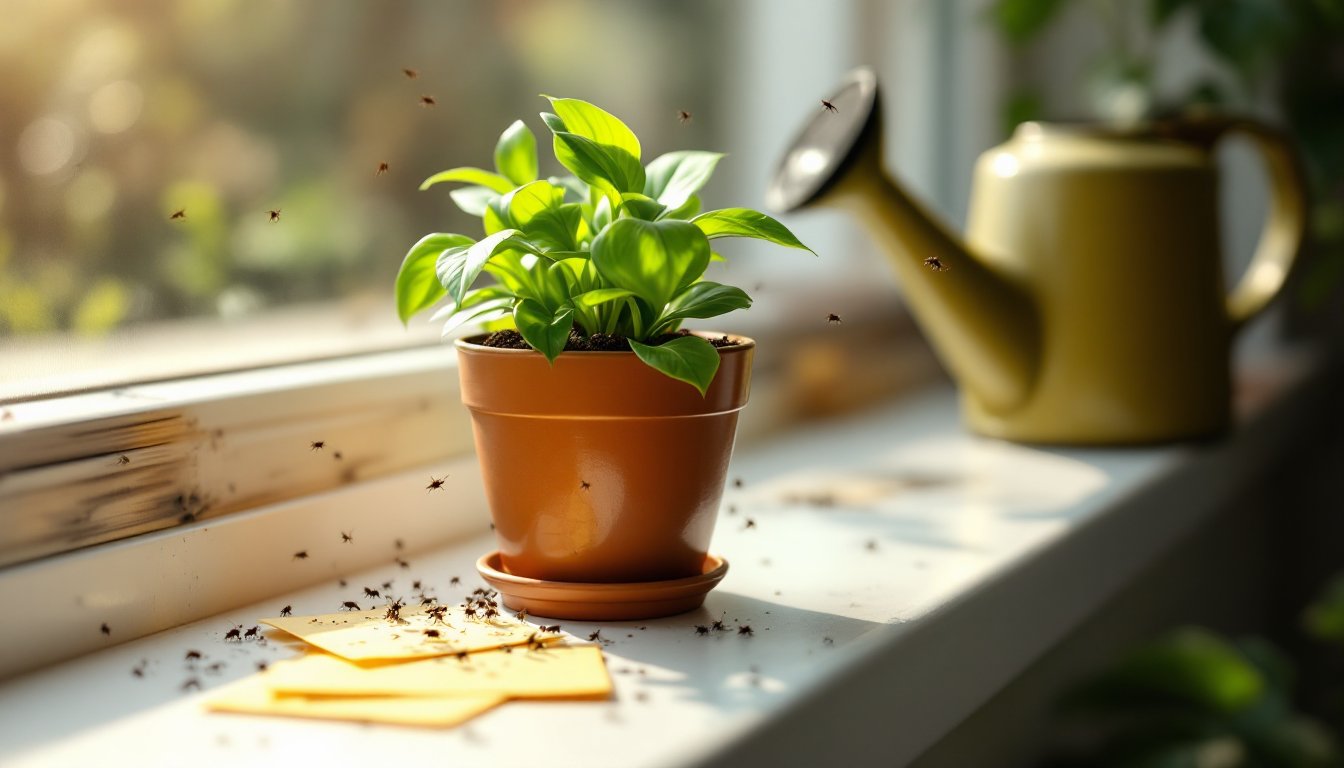
Fungus gnats are small, dark flies, usually about 1/8 inch long, that thrive in moist soil. Unlike some pests that damage plant tissue directly, fungus gnats lay their eggs in damp potting mix, and the larvae feed on fungi and organic matter in the soil. The real trouble starts when conditions favor rapid breeding: warm indoor temperatures (65–75°F), moisture-rich soil, and an abundance of decaying plant material.
These pests aren’t attracted to your plants because you’re doing something “wrong”, they’re attracted to the environment you’ve created. Overwatering is the #1 culprit. When soil stays wet too long, it becomes a breeding ground for both fungi (their food source) and the gnats themselves. Poor drainage, compacted potting mix, and accumulated dead leaves at the soil surface all make the situation worse. Buying infested plants or using contaminated potting soil can introduce gnats to your home, though it’s rare if you’re sourcing from reputable garden centers.
Signs Your House Plants Have a Gnat Problem
The most obvious sign is seeing small flies hovering around your plants, especially when you water them. They’re most active in the morning or evening and will flutter around if you nudge the pot. You might also notice them on nearby window sills or light fixtures, since they’re attracted to warmth and light.
A secondary indicator is finding tiny larvae in the top inch or two of soil, they look like microscopic white worms with dark heads. If you’re noticing yellowing leaves, wilting even though adequate water, or stunted growth, gnats may be contributing to the problem. But, keep in mind that plant stress from overwatering itself often causes these symptoms, so addressing moisture first is crucial.
One reliable way to confirm you have gnats is to place Common House Plants in a white bowl with a thin layer of water and a splash of dish soap. Let it sit overnight near your problem plant. Gnats will be attracted to the water and trapped by the soap, confirming their presence.
Quick Fixes to Eliminate Gnats Fast
Adjust Your Watering Schedule
The single most effective step is to let the top inch of soil dry out between waterings. This removes the moisture gnats need to breed and starves the larvae of their preferred environment. Instead of watering on a fixed schedule, check soil moisture with your finger, water only when the top inch feels dry to the touch.
When you do water, water thoroughly at the soil level, then empty excess from the drainage tray within 30 minutes. Don’t let pots sit in standing water. If your potting mix feels dense and stays wet longer than a week after watering, replace it with fresh mix: compacted soil drains poorly and traps moisture. For many indoor plants like Viney House Plants and Common Succulent House Plants, less water is safer than more.
This change alone often stops gnats within 2–3 weeks as larvae die and breeding stops. You won’t need to repot unless the mix is truly broken down.
Use Sticky Traps and Natural Treatments
Yellow sticky traps are your fastest, most visible win. These 2-3 inch cards attract and trap adult gnats without chemicals. Place them near soil level, where gnats hover. You’ll catch dozens within days and can monitor progress. They’re inexpensive (a pack of 10 costs $5–10) and effective for both monitoring and control. Replace traps every 1–2 weeks or when covered.
Hydrogen peroxide soil soak kills larvae quickly. Mix one part 3% hydrogen peroxide (the drugstore kind) with four parts water. Water your plant until the soil is saturated, then let it drain. The peroxide breaks down into water and oxygen, killing larvae on contact. Do this once, then resume normal watering with the adjusted schedule. The smell fades within hours.
For persistent infestations, neem oil or insecticidal soap sprayed on soil and foliage every 7 days for 3 weeks disrupts the gnat life cycle. Always follow label directions and test on a leaf first to ensure the plant tolerates it. Neem can leave a smell and requires multiple applications, but it’s organic and effective. If you prefer a hands-off approach, Good Housekeeping’s gnat removal guide covers additional commercial options worth exploring.
Long-Term Prevention Strategies for Gnat-Free Plants
Once you’ve broken the infestation cycle, prevention is about maintaining conditions gnats hate: dry-ish soil and good air circulation.
Watering discipline is non-negotiable. Water only when the top inch of soil is dry. Use room-temperature water and avoid splashing foliage, which can harbor fungus and mold, both attract gnats. If you tend to overwater, set phone reminders to check soil moisture rather than water on autopilot. For Coolest House Plants and Unusual House Plants, check care instructions: many tropical varieties prefer drying out slightly between waterings.
Improve drainage by ensuring every pot has at least one drainage hole and sits on a saucer to catch excess. If water sits for more than an hour after watering, the mix or pot drains poorly. Repot into faster-draining soil or a pot with larger drainage holes. A simple peat-free potting mix (like coco coir and perlite blends) drains faster than traditional mixes and is better for plant health.
Clean the soil surface by removing dead leaves, fallen flowers, and any decaying organic matter. This eliminates the fungi gnats feed on and makes the environment less attractive. Wipe the top inch of soil monthly with a clean hand or soft brush.
Quarantine new plants for a week or two before placing them near your collection. This prevents introducing pests (or diseases) to established plants. Check the soil of new purchases for gnats or their larvae before bringing them indoors.
Maintain airflow with a small fan on low speed 1–2 hours daily. Gnats struggle in moving air and prefer still, humid corners. Better airflow also prevents mold and fungal issues that attract them. If you’re shopping for new Large Indoor House Plants for a room, position them where air naturally circulates, not in dead corners or directly against walls.
Repot annually or as needed with fresh potting mix. Old soil compacts over time, traps moisture, and accumulates dead roots and debris. Fresh mix resets the environment and reduces pest pressure.
Conclusion
Gnats in house plants are frustrating but entirely manageable. Start by adjusting your watering to dry out the soil between waterings, this single step eliminates the breeding ground these pests need. Add yellow sticky traps to catch adults and confirm progress, then reinforce with long-term prevention: good drainage, surface cleaning, and consistent airflow. If you’re consistent and patient, gnats will disappear within weeks, and your indoor garden will be healthier for it. The key is remembering that overwatering caused the problem: solving it is really about finding the right moisture balance for each plant.