Most houseplants don’t thrive on ambition alone, they need light, and not just any light. If your succulents are stretching toward the window or your African violets refuse to bloom indoors, the culprit is usually insufficient lighting. Indoor plant lights bridge the gap between what nature provides and what your room can deliver. Whether you’re growing herbs on a kitchen shelf or creating a lush green corner in a basement, the right grow light makes the difference between a struggling plant and one that actually flourishes. This guide covers everything you need to know to choose, set up, and use indoor plant lights effectively.
Table of Contents
ToggleKey Takeaways
- Indoor plant lights replicate the full spectrum and 12-16 hour duration that houseplants need to thrive, especially in low-light spaces like basements, bathrooms, and dark corners.
- LED grow lights are the most efficient and cost-effective option, consuming 40-50% less electricity than fluorescents while lasting 20,000 to 50,000 hours with minimal heat risk to foliage.
- Matching light intensity to your plant type is essential: shade plants need 75-150 foot-candles, foliage plants need 200-300, and flowering or fruiting plants require 400-600 foot-candles to flourish.
- Proper positioning with 6-12 inches of height above foliage, reflective surfaces to boost efficiency, and consistent 12-16 hour photoperiods via timers are key to maximizing grow light effectiveness.
- A basic setup with a metal shelving unit, clip-on LED panels, and a simple timer provides an affordable way to support indoor plant growth without expensive equipment.
Why Indoor Plants Need Special Lighting
Plants evolved outdoors under the full spectrum of sunlight, roughly 6,000 to 6,500 Kelvin color temperature with intensity that varies by latitude and season. Your living room window, even a south-facing one, delivers a fraction of that intensity, and north-facing rooms get even less. Most houseplants adapted to tropical understories need 12 to 16 hours of moderate to bright indirect light daily. Without it, they divert energy to finding light (stretching toward windows, dropping lower leaves) instead of growing healthy foliage, flowering, or developing roots. Low light also slows photosynthesis, weakening the plant’s ability to fight off pests and disease. Indoor plant lights replicate the spectrum and duration plants need, allowing you to grow common house plants successfully in closets, bathrooms, kitchens, and dark corners. This is especially true for flowering plants and vegetables, which demand higher light intensity than foliage-only houseplants.
Types of Indoor Plant Grow Lights
Not all light fixtures are created equal. Each type has a different spectrum, heat output, energy efficiency, and cost profile. Understanding the basics helps you avoid overspending or undershooting your plants’ needs.
LED Grow Lights
Light-emitting diode (LED) grow lights are the modern standard and the most efficient option available. They produce light in the red and blue wavelengths that plants use most efficiently for growth and flowering. Full-spectrum LEDs contain both colors plus white light, mimicking natural daylight more closely than older technologies. LEDs run cool, they won’t scorch foliage if placed close to plants, and consume about 40-50% less electricity than fluorescents. They last 20,000 to 50,000 hours (years of daily use), reducing replacement costs. Prices have dropped dramatically since 2020, making quality LED panels affordable for most DIYers. Options range from clip-on lights for single shelves to bar fixtures and panel systems for serious plant collections.
Fluorescent and T5 Lights
T5 fluorescent tubes deliver a cool white spectrum ideal for leafy vegetables and seedlings. They’re cheaper upfront than LEDs and remain useful for low-intensity applications. T5 bulbs produce less heat than older T8 or T12 fixtures, allowing closer placement to plants without burning foliage. But, they consume more energy than LEDs, last only 10,000-15,000 hours, and require ballasts and fixtures that add bulk. They’re a solid budget option if you’re growing low-light foliage plants or starting seeds, but they’ll cost more to operate long-term.
Incandescent and Heat Lamps
Incandescent and halogen bulbs are mostly obsolete for plant growing. They emit most energy as heat rather than usable light, wasting electricity and risking leaf burn. The spectrum skews heavily toward red, promoting weak, leggy growth. They’re short-lived and run hot enough to crack nearby glass or ignite flammable materials. The only exception: a low-wattage incandescent bulb can supplement warmth in a propagation mat setup during winter, but even then, LED or fluorescent lighting handles the photosynthesis job better.
How to Choose the Right Light for Your Plants
Matching the light to your plants’ needs is more important than buying the most expensive fixture. Three factors drive the decision: light intensity (measured in foot-candles or lumens per square foot), spectrum (color temperature in Kelvin), and photoperiod (daily duration).
Start by identifying your plants’ light requirements. Shade-loving ferns and pothos need 75-150 foot-candles: foliage plants like Swiss cheese plants want 200-300: fruiting plants and most flowering species need 400-600 foot-candles to thrive. You’ll find these specs on plant care tags or by checking reliable sources. Large indoor house plants often have similar requirements to their smaller cousins, so scaling up is straightforward.
Next, consider space and budget. A single clip-on LED light ($25-60) works fine for one shelf of small plants. A 2-by-2-foot LED panel ($80-150) covers a cart or shelving unit holding a dozen plants. Industrial-style bar fixtures or multi-light rigs suit serious collectors but cost $200-500+. Don’t buy more light than you need, oversizing wastes electricity and can bleach foliage.
Spectrum matters less for general foliage growth (full-spectrum LEDs handle it all), but matters more for flowering and fruiting. A ratio of 3 parts red to 1 part blue wavelengths encourages blooming. If you’re growing unusual house plants that flower indoors or starting vegetables, a full-spectrum or warm-white LED is a safer bet than a cool-white fluorescent.
Finally, set the photoperiod. Most houseplants need 12-16 hours of light daily. A simple timer ($15-30) ensures consistency without you flipping switches. Seedlings and high-intensity growers benefit from 16 hours: shade plants might thrive on 12. Avoid 24-hour lighting, plants need a dark period for proper growth and respiration.
Budget-conscious growers can find quality starter kits from reputable manufacturers, and expert reviews are available to compare options before committing.
Setting Up and Positioning Your Grow Lights
Installation and placement determine whether your light investment pays off or underperforms. Start with height and distance. Most LED grow lights should hang 6-12 inches above foliage: fluorescents can sit closer at 3-6 inches (they run cooler). As plants grow, raise the light to maintain that distance, foliage touching the fixture won’t burn with LEDs, but the light won’t penetrate the canopy evenly if too close. Use adjustable chains or rope ratchets to raise fixtures easily without dismounting them.
Positioning matters too. Center lights over plants so coverage is even. Fixtures at the edge of a table leave corners dark. If you’re lighting multiple plants of different heights, arrange taller plants toward the edges and shorter ones center-stage. Reflective surfaces, white paint, aluminum foil, or commercial reflector hoods, bounce light back onto plants instead of letting it escape. This improves efficiency by 20-30% without buying additional fixtures.
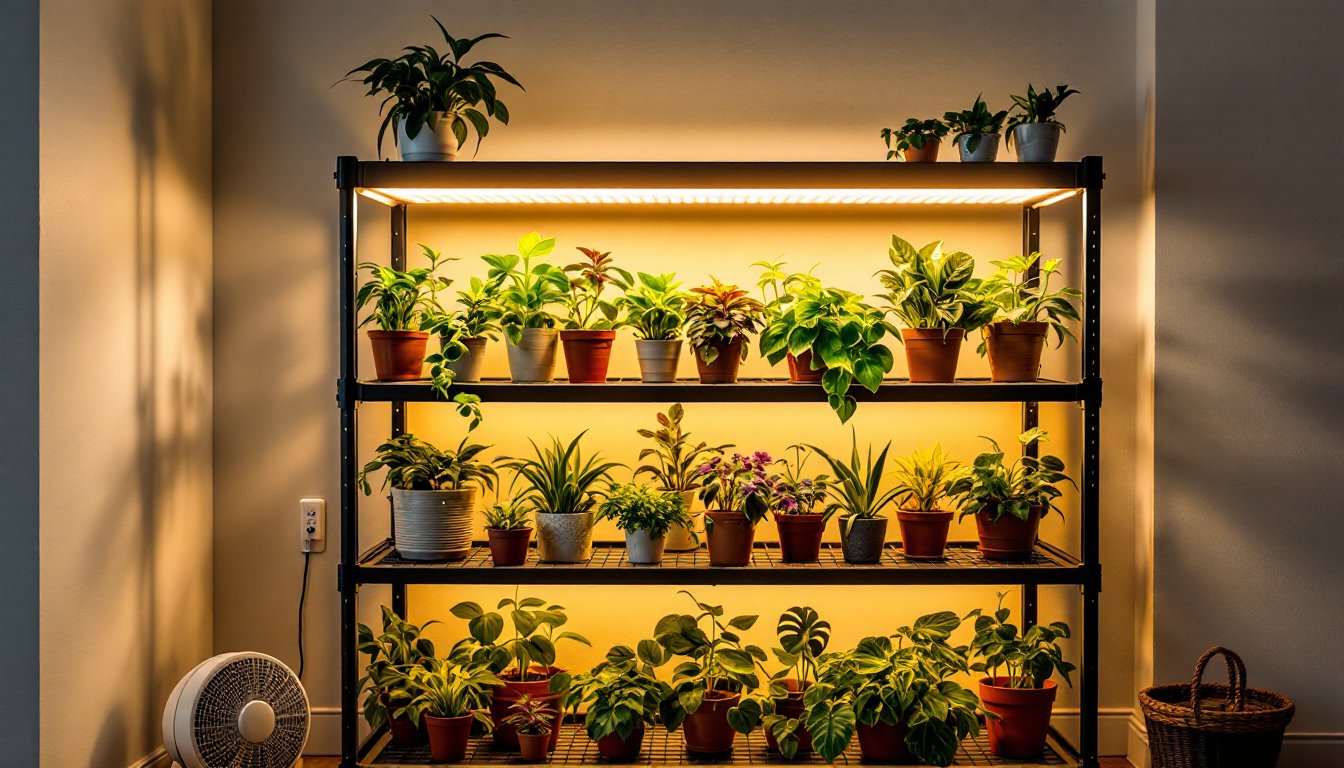
Ventilation is essential. Stagnant air under grow lights promotes fungal issues and weakens plants even under ideal light. A small oscillating fan ($20-40) set on low circulation helps tremendously. It also strengthens stems by providing gentle air movement, mimicking outdoor wind.
Electrical safety matters. Use a power strip with a surge protector and on/off switch rated for your light’s wattage. Keep cords away from water, wet hands and electrical cords don’t mix. Plug-in timers are affordable and prevent human error: set it and forget it. If you’re running multiple lights, calculate total wattage to avoid overloading a circuit. A rule of thumb: stay below 80% of a circuit’s rated capacity. If uncertain, consult your home’s electrical panel or ask an electrician.
Starting a setup doesn’t require fancy shelving. A basic metal bookcase ($60-100) with adjustable shelves, LED panels clipped to each shelf, and a timer works brilliantly. Dorm-sized seedling trays fit on most shelves, allowing you to grow IKEA house plants or rooted cuttings alongside mature specimens. Avoid particle board that warps when wet: metal or treated wood resists moisture better.